



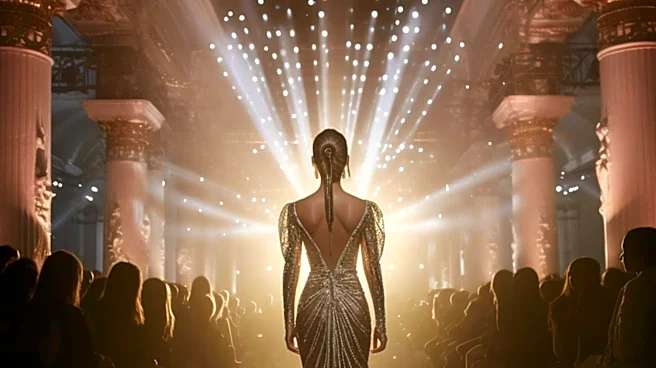
More Than Just Clothes
In the landscape of the “big four” fashion weeks, Paris has long been the home of established luxury, Milan the bastion of glamour, and New York the center of commercial polish. But in the 1990s and early 2000s, London carved out a different identity:
it was the capital of risk. This was an era when a fashion show wasn't just a procession of garments, but a full-blown cultural experience that could be shocking, deeply emotional, or breathtakingly artistic. Designers treated the runway as a stage for performance art, telling stories that were political, personal, and provocative. The question wasn't just “What will the clothes look like?” but “What is the designer trying to say?” This approach transformed presentations into unmissable events where fashion collided with theater and social commentary.
The Rise of the Fearless Visionaries
This golden age was defined by a generation of designers who refused to play it safe. Figures like Alexander McQueen, John Galliano, and Hussein Chalayan became notorious for their theatricality. McQueen, in particular, redefined the runway show with concepts that are now legendary in fashion history. His shows were intellectual and dramatic, drawing inspiration from history, nature, and politics. The infamous Spring/Summer 1999 show, where two industrial robots spray-painted a dress worn by a spinning Shalom Harlow, is a prime example of fashion transcending clothing to become a moment of pure performance art. Likewise, Hussein Chalayan’s cerebral presentations, such as his Fall/Winter 2000 show where furniture was transformed into clothing, challenged the very definition of garments and their relationship to the body. These designers weren't just making clothes; they were creating moments.
An Incubator of Raw Talent
Much of this creative explosion can be traced back to one institution: Central Saint Martins. In the 90s, the art school was a crucible for iconoclastic talent, producing a staggering list of alumni that included McQueen, Galliano, Stella McCartney, and Phoebe Philo. Unlike more traditional fashion programs, CSM fostered an art-school mentality where experimentation was paramount and commercial viability was a secondary concern. This environment encouraged students to develop a strong, unique voice. The result was a wave of graduates who arrived at London Fashion Week with fully formed, often radical, perspectives, ready to challenge the establishment. McQueen's entire 1992 graduate collection, for instance, was famously bought by the eccentric stylist Isabella Blow, signaling the industry's hunger for this new, defiant creativity.
A Soundtrack of 'Cool Britannia'
The energy of London Fashion Week didn't exist in a vacuum. It was inextricably linked to the wider cultural phenomenon of "Cool Britannia." The mid-90s saw a surge of national pride and optimism in the UK, fueled by the rise of New Labour, the global dominance of Britpop bands like Oasis and Blur, and the provocative work of the Young British Artists (YBAs) like Damien Hirst. Fashion was a key pillar of this moment. The runways of McQueen and Galliano shared a synergistic energy with the art of the YBAs, both challenging mainstream norms. The Union Jack, famously worn as a dress by Geri Halliwell of the Spice Girls, became a playful symbol of this new, confident British identity, reflecting a spirit of exuberant, gritty, and alternative youth culture that was palpable on the city's catwalks.
What's Changed?
Today's London Fashion Week is a different beast. The digital revolution has democratized access, with shows live-streamed to a global audience and social media turning every moment into viral content. This has brought immense opportunity but has also shifted the focus. The schedule is more packed, the demands more commercial, and the raw, sometimes chaotic, experimentation of the 90s has been tempered by the realities of a globalized industry. While LFW still champions emerging talent, the ecosystem has changed. The pressure to create instantly Instagrammable moments and commercially viable collections is immense, leaving less room for the high-concept, budget-be-damned performance art that once made London the most exciting week on the calendar.