





The Field of Favorites
To understand why Kevin Spacey’s victory at the 68th Academy Awards in March 1996 felt like a jolt, you have to look at the competition. The race for Best Supporting Actor was packed with formidable and, in some cases, more conventional Oscar-friendly
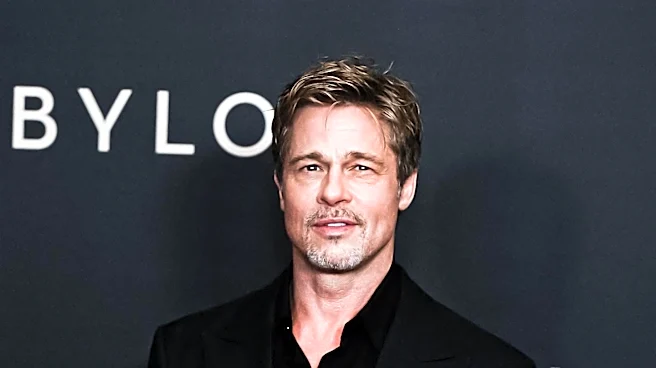
performances. Ed Harris was a strong contender for his role as NASA Flight Director Gene Kranz in the patriotic blockbuster Apollo 13. His portrayal was stoic, heroic, and grounded in real-life integrity. Then there was James Cromwell, who charmed the world as the gentle Farmer Hoggett in the surprise smash hit Babe, a role that carried immense sentimental weight. Rounding out the category were Brad Pitt, a megastar recognized for his twitchy, against-type performance in the sci-fi thriller 12 Monkeys, and Tim Roth for his villainous turn in Rob Roy. Against this backdrop, Spacey’s performance as the meek, cerebral palsy-afflicted con man Verbal Kint in The Usual Suspects was the dark horse. While the film was a critical darling, it was a complex, cynical neo-noir, not the kind of uplifting or historically significant fare the Academy typically rewards.
The Role of a Lifetime
What Spacey had in his corner was a performance that was impossible to ignore. His portrayal of Verbal Kint was a masterclass in subtlety and misdirection. From the specific physicality of his character’s disability to his quiet, seemingly unreliable narration, Spacey built a character who was simultaneously pathetic and magnetic. The Usual Suspects, penned by Oscar-winner Christopher McQuarrie, was a puzzle box of a film, and Kint was the key. The entire movie rests on the audience believing Kint’s story, which he weaves from a collage of details in a police detective's office. The performance is meticulously layered; on first watch, he’s a pitiable survivor, but on second watch, after the legendary twist ending reveals him to be the mythical crime lord Keyser Söze, every glance and stammer is re-contextualized as a calculated lie. It was a high-wire act. Voters weren't just rewarding a good performance; they were rewarding the audacity of a character who fools everyone, including the audience. It was the kind of uniquely cinematic role that comes along once in a generation.
The Power of a Perfect Year
An actor’s Oscar chances are often boosted by overall career momentum, and in 1995, no one had more momentum than Kevin Spacey. The same year he mesmerized audiences as Verbal Kint, he terrified them as the chillingly methodical serial killer John Doe in David Fincher’s Se7en. Though he went uncredited in the film’s opening and was absent from its marketing to preserve the third-act surprise, his brief but searing performance was all anyone could talk about. In a single year, Spacey delivered two of the decade's most iconic and contrasting characters: one a picture of weakness, the other a portrait of absolute evil. This one-two punch created an undeniable narrative. It showcased his incredible range and solidified his reputation as one of the most compelling actors of his generation. The Oscar for The Usual Suspects wasn't just for Verbal Kint; it was an acknowledgment of an artist at the absolute peak of his powers. The Academy couldn't give him an award for Se7en, so the vote for The Usual Suspects served as a proxy for his entire, incredible year.
A Win for a New Kind of Film
Spacey’s win also signaled a subtle but important shift in the Academy's tastes. The mid-1990s were the heyday of independent cinema’s crossover into the mainstream. Films like Quentin Tarantino's Pulp Fiction had already crashed the gates a year earlier, proving that audiences and critics were hungry for smart, stylish, and morally ambiguous storytelling. The Usual Suspects was a prime example of this trend. It was a low-budget, high-concept thriller that valued cleverness and style over sentimentality. By awarding Spacey, the Academy was tipping its hat to this edgier wave of filmmaking. A vote for Ed Harris or James Cromwell would have been a vote for tradition. A vote for Kevin Spacey was a vote for the future—a recognition that some of the most exciting work in Hollywood was happening in the shadows, with complex narratives that played with audience expectations and refused to provide easy answers.