






The Shark That Invented the Blockbuster
Before 1975, summer was considered a dumping ground for Hollywood, a time when audiences were assumed to be outdoors, not in a dark theater. Then came Jaws. Steven Spielberg's thriller about a great white shark terrorizing a New England resort town was an unprecedented
phenomenon. Universal Pictures launched a massive television advertising campaign and gave the film a wide release on over 450 screens—a novel strategy at the time. The result was pandemonium. Audiences lined up around the block, and Jaws became the first film to gross over $100 million, making it the highest-grossing film in history until Star Wars two years later. More importantly, it created the blueprint for the summer blockbuster: a high-concept, thrill-a-minute event movie that you had to see on opening weekend.
A Galaxy of Merchandise
If Jaws created the summer event, Star Wars (1977) turned it into a business empire. George Lucas's space opera wasn't just a movie; it was a universe. Famously, Lucas negotiated to keep the merchandising and sequel rights to his film, a deal that 20th Century Fox executives considered a minor concession. It turned out to be one of the most lucrative deals in entertainment history. Sales of action figures, lunchboxes, and T-shirts exploded, proving that a movie's life—and revenue—could extend far beyond the box office. Between 1977 and 1978 alone, Star Wars toys generated $100 million in sales. This was the next crucial step: the realization that a successful film could be the foundation for a much larger, and more profitable, commercial property. The movie was no longer just the product; it was an advertisement for the real products.
The Sequel Assembly Line
The 1980s and 90s saw Hollywood internalize these lessons, leading to the rise of the sequel. If a movie worked once, why not do it again? This era gave us endless installments for icons like Rocky Balboa, John Rambo, and a host of slasher-movie villains. While often profitable, these were largely exercises in repetition, not expansion. The goal was to replicate a hit, not necessarily build a world. However, technological advances, particularly the rise of CGI in films like Jurassic Park (another Spielberg game-changer), began to raise the stakes. Spectacle became more important than ever, and the budgets required to deliver it made studios increasingly risk-averse. A sequel to a known hit, even a tired one, felt like a safer bet than an original idea.
The Universe Becomes the Standard
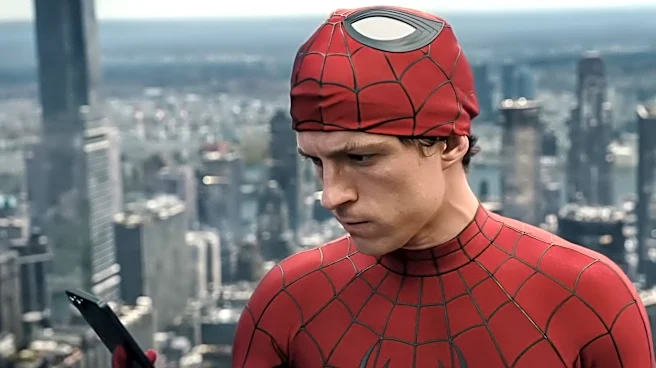
The true paradigm shift arrived in 2008 with Iron Man. The movie itself was a successful superhero origin story, but its masterstroke was a post-credits scene where Nick Fury appears to discuss the "Avenger Initiative." With that, the Marvel Cinematic Universe (MCU) was born. This wasn't just about making sequels; it was about creating a sprawling, interconnected web of films and, later, TV shows. Each project served not only as its own story but as a building block for future crossover events. This model, masterminded by Kevin Feige, turned filmmaking into a form of long-term economic planning. Studios could map out release schedules years in advance, secure talent with multi-picture deals, and build a guaranteed audience that was invested in the overarching narrative. The success was staggering, and soon every studio was scrambling to build its own "cinematic universe."
Living in a Franchise World
Today, we live in the world that Jaws and Star Wars built, perfected by Marvel. The summer movie slate is dominated by intellectual property (IP) because franchises have become the financial engines that power modern studios. They offer predictable revenue streams in a notoriously unpredictable business. This strategy minimizes risk but also potentially narrows creativity. When a studio spends hundreds of millions on a film, it's far safer to bank on a character audiences already know than to take a chance on something new. The result is a cultural landscape filled with familiar heroes and endlessly extended storylines, for better or worse. The blockbuster has evolved from a standalone event into a perpetual motion machine, always promising that the next adventure is just around the corner.