
Chris Rock's Uncomfortable Truth Behind 'Misty Green'
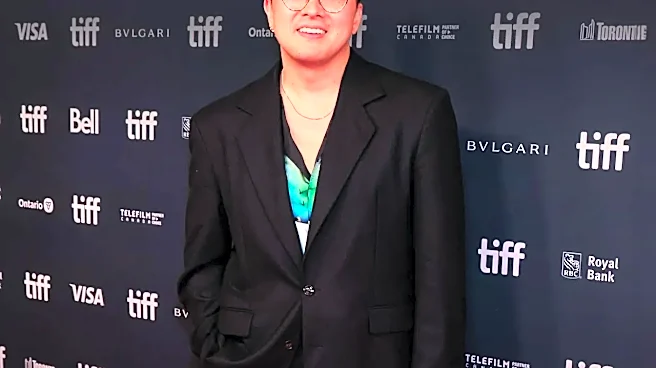
Chris Rock’s latest directorial effort, 'Misty Green', arrived at TIFF as a powerful look at a Hollywood actress, played by a revelatory Rosalind Eleazar, whose career is derailed by her off-screen reputation.
The film itself is a sharp, honest look at the industry. But it was during the Q&A that Rock reframed the entire project. When asked about a particularly grueling casting call scene, Rock didn't just explain the filmmaking process. Instead, he bluntly stated, "That scene isn't just a scene. That's a transcript." He revealed that the brutal sequence was based on a verbatim story told to him by three different successful Black actresses, changing only the names. The comment sent a wave of silence through the theater. Suddenly, 'Misty Green' wasn't just a compelling work of fiction; it became a piece of searing documentary, forcing the audience to reconsider every moment of Eleazar's performance not as acting, but as a chilling re-enactment of systemic industry prejudice.
The Hidden Grief in 'The Last Photograph'
Zack Snyder’s 'The Last Photograph' was one of the festival’s most divisive films, with critics calling it everything from a “fascinating mess” to “surprisingly human.” The movie follows a war photographer on a journey to find the subject of his most famous picture. On screen, it’s a sprawling, visually dense thriller. In the Q&A, however, Snyder revealed the film’s secret heart. He explained that the entire project was an allegorical retelling of his grieving process following a personal family tragedy. He pointed to a recurring visual motif—a specific species of butterfly that appears in seven different shots—as a private symbol for his daughter. “The search in the film… it’s not really about finding a person,” Snyder said, his voice thick with emotion. “It’s about trying to find a memory that feels whole again.” This admission transformed the film from a convoluted action piece into a deeply personal and heartbreaking scavenger hunt for solace. The film’s perceived flaws, its messy structure and aimless feel, were suddenly re-contextualized as an intentional reflection of the chaotic nature of grief itself.
The Secret Language of 'Djinn Wedding'
Ferit Karahan's surreal family drama 'Djinn Wedding' was praised by critics for its mysterious, dreamlike quality, with comparisons to Kafka and Ari Aster. The film, set in rural Turkey, is filled with strange rituals and whispered family secrets. Its most puzzling element was the seemingly nonsensical phrases spoken by the children in the film. An audience member asked Karahan if the lines were improvised to create a sense of uncanny chaos. Karahan smiled and shared the key that unlocked the entire film: the phrases weren't gibberish at all. They were direct quotes from the diary of his own grandmother, who had suffered from a degenerative neurological disease. “She would write down these beautiful, broken sentences that made no literal sense, but captured the feeling of a moment perfectly,” he explained. He instructed the child actors to deliver the lines with the sincerity of profound truths. With that single answer, 'Djinn Wedding' shifted from a surrealist puzzle box into a poignant exploration of how a family processes and mythologizes the slow loss of a loved one, turning the nonsensical into the sacred.
Cynthia Erivo's On-Set Rule for 'Prima Facie'
In 'Prima Facie', Cynthia Erivo gives a towering performance as a defense barrister who becomes a victim of sexual assault, forcing her to confront the very legal system she once mastered. The film is an intense, harrowing watch. During the Q&A, director Susanna White was asked how she and Erivo sustained that level of emotional intensity on set. Erivo herself took the microphone and shared a surprising detail. She explained that to protect her own mental health and to honor the gravity of the story, she had a rule: after every single take of an emotionally difficult scene, the entire cast and crew had to share a joke. “We had to find a moment of light,” Erivo said. “It was the only way to keep from being swallowed by the dark.” This revelation didn't just offer a glimpse into the craft of a brilliant actor; it fundamentally changed the audience's perception of the final product. The raw, painful performance on screen was not the result of wallowing in misery, but an act of incredible control, bracketed by moments of deliberate, defiant joy.