








It’s All About the Blue
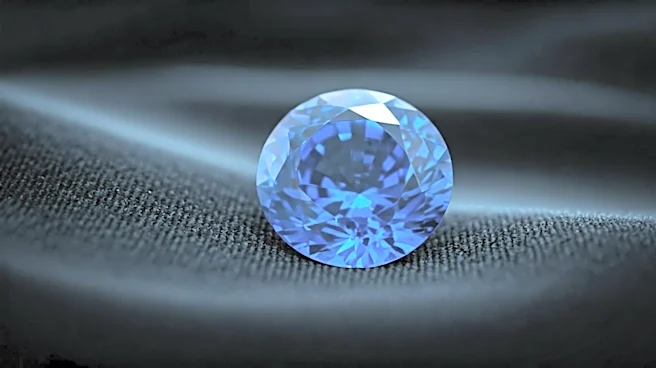
First things first: with sapphires, color is king. While these gems come in a rainbow of hues known as “fancy sapphires,” the classic, rich blue is the standard-bearer for value. But not just any blue will do. The most coveted sapphires have a pure, highly
saturated, velvety blue, often described as “cornflower blue.” Stones that are too dark, inky, or have hints of green or gray are valued significantly less. This specific, vibrant shade is incredibly rare in nature, and that rarity is the primary driver of its price. Think of it like a perfectly ripe piece of fruit—many are good, but only a few are flawless, and those are the ones that command a premium.
The Myth of the ‘Untouched’ Stone
Here’s a secret the jewelry counter might not tell you: the vast majority of sapphires on the market—over 95%—are heat-treated. This is a permanent and universally accepted process where gems are heated to high temperatures to improve their color and clarity. It’s not a deceptive practice; it’s standard. The real premium, then, isn’t just for a pretty stone, but for an *untreated* pretty stone. A natural, unheated sapphire with top-tier color is an extreme rarity, a true collector's item. So when you see a four- or five-figure price tag, you’re often paying for the good-but-treated version. The six- or seven-figure price tag? That’s reserved for the gem that came out of the ground looking perfect, which is almost a geological miracle.
Location, Location, Location
Like in real estate, a sapphire’s origin story matters immensely. The most legendary (and expensive) sapphires historically came from Kashmir, a region nestled in the Himalayas. These gems are famous for their unmatched velvety blue and have a near-mythical status, as the mines were exhausted over a century ago. A certified Kashmir sapphire can be worth 50% to 100% more than a similar stone from another location. Stones from Burma (now Myanmar) and Ceylon (now Sri Lanka) are also highly prized. Is a sapphire from Sri Lanka physically different from one mined in Madagascar or Australia? To the naked eye, perhaps not. But for collectors and connoisseurs, the provenance—the history and rarity tied to that specific place—is a huge part of what they’re paying for.
What About the Other 'Cs'?
If you’ve ever shopped for a diamond, you know the “Four Cs”: Color, Clarity, Cut, and Carat. While they all apply to sapphires, their importance is weighted differently. As we’ve established, color is paramount. Clarity is next; a good sapphire should be “eye-clean,” meaning it has no inclusions visible without magnification. Unlike diamonds, however, a little bit of internal “silk” (tiny needle-like inclusions) can sometimes be desirable in a sapphire, as it contributes to that soft, velvety appearance. Cut is important for brilliance, but sapphire cutters prioritize preserving weight and color over achieving a perfect, symmetrical cut. Finally, carat weight affects price exponentially. A five-carat sapphire isn’t just five times the price of a one-carat stone; it can be 25 times as much, because large, high-quality sapphires are exceptionally rare.
The Lab-Grown Question
For those who love the look but not the price tag, there's the lab-grown sapphire. These are not fakes; they are physically, chemically, and optically identical to their mined counterparts. The only difference is their origin. Created in a controlled environment, they can be produced with flawless clarity and perfect color for a fraction of the cost of a natural stone. If your priority is a beautiful, durable blue gem for a piece of jewelry, a lab-grown sapphire offers incredible value. The premium for a natural sapphire is for its rarity and its billion-year-old story. The lab-grown option gives you the same aesthetic result without paying for the geological lottery ticket.