



The Agony of Inaction
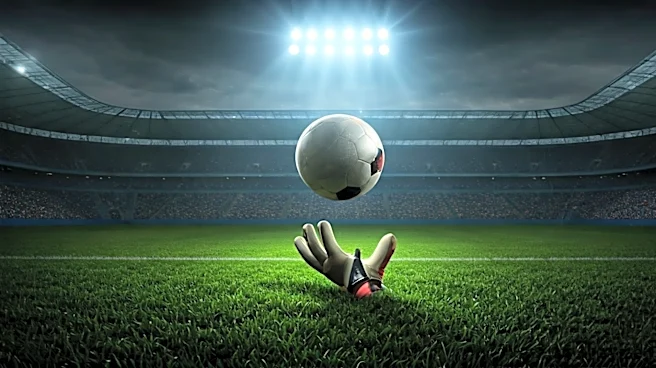
Imagine being the goalkeeper for a team like Manchester City or a recent Real Madrid squad. For 85 minutes of a 90-minute match, your primary job is to watch. You might jog from one side of your penalty area to the other, shout instructions that your teammates
can’t hear, and touch the ball only a handful of times. Your team is so dominant, so suffocating in its possession, that you are effectively a highly paid spectator. This is the first, and perhaps cruelest, sneaky pressure: the demand for instant perfection after long periods of idleness. Unlike a keeper on a struggling team who faces 15 shots a game and is always warm, focused, and in the rhythm of the match, the powerhouse keeper lives in a state of cold readiness. Then, in the 88th minute, a single counter-attack breaks through. One shot, one moment of decision-making, is all they will face. A striker can miss four chances and score the fifth to be a hero. If a top keeper makes one mistake, it’s all anyone will remember. The psychological challenge is immense: maintaining absolute, razor-sharp focus while having almost nothing to do.
The Playmaker with Gloves
The job description for a top goalkeeper has fundamentally changed in the last decade. It’s no longer enough to be a great shot-stopper. Today’s elite managers demand a “sweeper-keeper” who is as much a part of the attack as the defense. They are expected to be the 11th outfield player, comfortable receiving a back-pass under pressure with an opponent charging down, and capable of spraying a 60-yard pass to a winger’s feet to launch a counter-attack.
This is a massive tactical and technical burden. Players like Liverpool's Alisson Becker and Manchester City's Ederson are valued as much for their feet as their hands. A misplaced pass from a midfielder is a turnover; a misplaced pass from a goalkeeper is a goal. This added responsibility creates a new layer of risk. Every time they get the ball, they face a choice: play it safe and potentially kill their team's momentum, or take a risk to start an attack and possibly create a catastrophic error. This tactical pressure to be a deep-lying playmaker is a constant, nerve-shredding tightrope walk.
The Loneliness of the Last Man
Every player makes mistakes, but no player’s mistakes are as visible or as consequential as the goalkeeper’s. A defender can miss a tackle, but a teammate might cover for them. A forward can sky a shot over the bar, but another chance might come. When a goalkeeper fumbles a cross, misjudges a charge, or lets a soft shot slip through their grasp, the result is almost always a goal. The scoreboard changes. The stadium erupts—or falls silent.
This is the scapegoat paradox. Goalkeepers are insulated from the run of play but completely exposed during its most critical moments. The position carries a unique loneliness; when the ball is at the other end of the field, you are alone with your thoughts. When the action comes your way, you are alone against the opponent. And when you make an error, you are often alone in the blame. This isolation, combined with the extreme consequences of any mistake, forges a very specific mental fortitude—or it breaks players who can't handle it.
The Weight of a Perfect Standard
For the modern powerhouse goalkeeper, the expectation is not excellence; it’s perfection. Fans and coaches don't just expect them to make the saves they *should* make; they expect them to make the saves they *shouldn't*. The spectacular, physics-defying stop has become the baseline expectation for keepers at clubs like Bayern Munich or Paris Saint-Germain.
This impossibly high bar means there is little room for praise and infinite room for criticism. A clean sheet is simply doing your job. A brilliant game with seven saves and one goal conceded is still seen as a failure in some contexts. This environment, where flawless performance is the only acceptable outcome, contributes to a sneakier, more internal pressure. It's the pressure to live up to a standard that, by definition, is impossible to maintain week after week. The best keepers aren’t just battling opponents; they're battling a relentless expectation of flawlessness.