
The Grace Kelly Effect
To understand the scarf’s role in Monaco, you have to start with Princess Grace. Before she was royalty, Grace Kelly was a Hollywood star who embodied an effortless, American-bred elegance. When she married
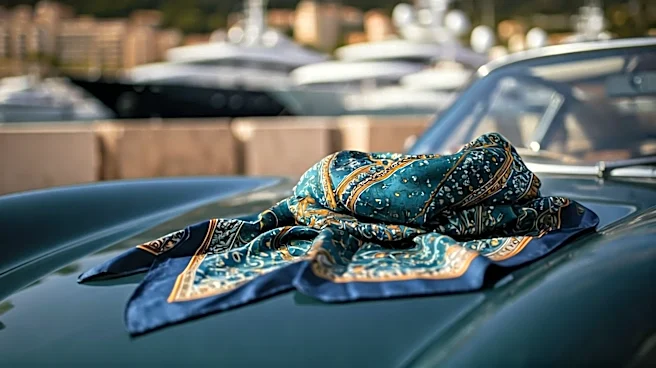
Prince Rainier III, she didn't just bring her fame to the principality; she brought her style. Famously, she used a Hermès scarf as a makeshift sling for her arm in 1956, an image that cemented the accessory's association with aristocratic cool. More than just a movie star, she became the matriarch of Monaco's modern glamour. Today, when a woman knots a silk square around her head to shield her hair from the sea spray on a yacht in Port Hercules, she isn't just being practical. She is channeling a legacy, consciously or not, and adhering to a style blueprint written over half a century ago. The scarf became a key part of the Riviera uniform, signaling a relaxed yet impeccable poise that defines the event.
A Uniform of Unspoken Wealth
In a place where overt displays of wealth can sometimes feel commonplace, the silk scarf operates on a more nuanced level. It’s a form of 'stealth wealth' that is instantly recognizable to those in the know. This isn't about just any piece of silk; the code often demands a specific pedigree. The intricate patterns of an Hermès 'carré,' the iconic camellias of a Chanel scarf, or the vintage chic of a Gucci print are not just design choices—they are declarations. Tying a $500 silk square to the handle of a Birkin bag or letting it flutter from the neck of a simple linen shirt is a gesture that says more than a logo-heavy outfit ever could. It signals an appreciation for craftsmanship, heritage, and an understanding that true luxury doesn't need to shout. It’s a membership card to a club that values legacy over trends, making it the perfect accessory for an event steeped in history like the Grand Prix.
The Language of the Knot
How the scarf is worn is just as important as the scarf itself. Each style is a different sentence in the language of Monaco glamour. The classic 'headscarf and sunglasses' look is the most iconic, evoking images of Sophia Loren or Brigitte Bardot in a convertible. It’s practical, protecting styled hair from the wind, but it’s also cinematic, framing the face and adding an air of mystery. Worn loosely around the neck—the 'ascot' or 'neckerchief' style—it suggests a more casual, nautical elegance, perfect for a day watching the race from a balcony. Tying it to a wrist or a handbag is a more modern, playful interpretation, often favored by a younger crowd. This gesture signifies an awareness of the code but a desire to reinterpret it with a touch of nonchalance. It says, 'I belong here, but I play by my own rules.' Each knot, twist, and drape is a deliberate choice, signaling one's role and mood within the Grand Prix's complex social theater.
Modern Twists on a Classic Code
While the core traditions remain, the styling codes are not entirely static. The new generation of influencers and attendees, from F1 drivers' partners to an international jet set, are putting their own spin on the classic. You might see a vintage scarf worn as a bandeau top, a bold statement that blends retro vibes with modern festival fashion. Others might use a smaller 'twilly' scarf as a hair tie for a sleek ponytail, a subtle nod to the tradition that feels fresh and youthful. These modern interpretations show that the scarf's power lies in its versatility. It can be a symbol of old-world decorum or a tool for contemporary self-expression. By adapting the scarf to current trends, the next generation ensures its continued relevance. They are not breaking the code so much as updating its software, proving that Monaco glamour, like the race itself, is all about skillfully navigating the curves.