






The Believer's Interpretation: Proof of a Cover-Up
For the true believer, any official government statement on Unidentified Anomalous Phenomena (UAPs) is filtered through a lens of long-held conviction and institutional distrust. When a Pentagon report admits that dozens of sightings cannot be explained,
it’s not a statement of uncertainty; it's a crack in the dam of secrecy. Every redacted word in a declassified document isn’t missing information—it’s a breadcrumb leading to a hidden truth. The testimony of whistleblowers like David Grusch, who allege secret government programs involving non-human technology, is treated as gospel. To this camp, the government’s cautious, bureaucratic language is simply a new form of cover-up. They see official acknowledgement not as a starting point for inquiry, but as the final vindication of decades of ridicule.
The Skeptic's Interpretation: A Whole Lot of Nothing
On the other side of the inkblot, the skeptic sees the same data and arrives at a profoundly different conclusion. For them, the absence of extraordinary evidence is, in itself, the evidence. When the Director of National Intelligence releases a report that categorizes most UAP sightings as potential airborne clutter, sensor anomalies, or foreign surveillance drones, the skeptic nods knowingly. The handful of “unexplained” cases aren't proof of aliens; they are simply a data gap waiting for a mundane explanation. The lack of a single, verifiable piece of exotic material, a clear high-resolution photo, or a dead alien on a slab is all that matters. To a skeptic, whistleblower testimony without corroborating physical proof is just a story, and congressional hearings are political theater, not scientific inquiry. The government’s inability to produce a smoking gun isn’t a cover-up; it’s proof that there is no gun to begin with.
The Ambiguous Inkblot Itself
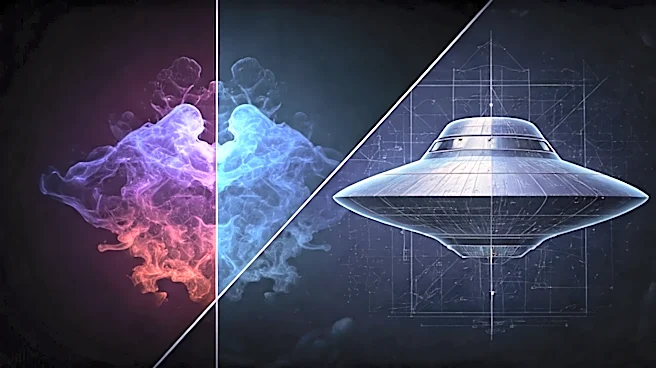
The reason both sides can claim victory is that the “disclosures” are intentionally, and perhaps necessarily, ambiguous. The data consists of grainy infrared videos, anecdotal accounts from credible pilots, and radar data that is difficult to interpret. The Pentagon’s All-domain Anomaly Resolution Office (AARO) doesn't issue statements saying, “We’ve found aliens” or “It’s all weather balloons.” Instead, it uses carefully vetted language, concluding that some phenomena “appear to have demonstrated unusual flight characteristics or performance capabilities.” This phrasing is the perfect Rorschach test. A believer hears “unusual flight characteristics” and thinks “alien technology.” A skeptic hears the same phrase and thinks “unfamiliar sensor readings or a clever new drone.” The reports are designed not to draw a firm conclusion, but to state what is known and, more importantly, what isn't. This vacuum of certainty becomes a canvas for everyone to project their own beliefs.
Washington's Weird New Role
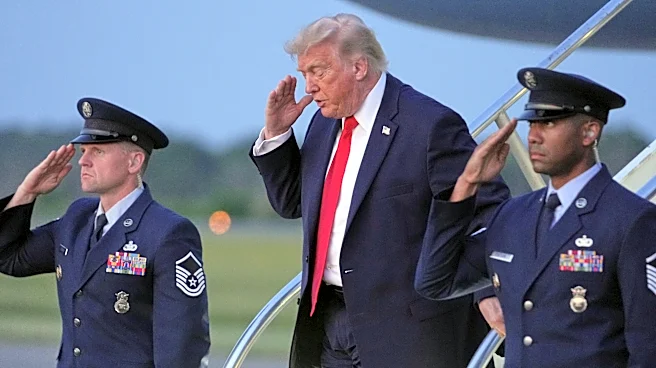
What’s shifted the dynamic recently is Washington's official involvement. For decades, the topic was relegated to the cultural fringe. Now, with Senate hearings and mandated reports, UAPs have a veneer of legitimacy. This simultaneous action fuels both camps. Believers see Congress taking the issue seriously as a sign that their convictions are finally being validated at the highest levels. They point to bipartisan interest from lawmakers like Marco Rubio and Chuck Schumer as proof that something big is happening behind the scenes. Skeptics, meanwhile, see it as a prudent but ultimately fruitless exercise in national security. The government has an obligation to identify anything in its airspace, they argue. The fact that they’ve created a formal process to investigate and have still found no definitive proof of extraterrestrial life only strengthens the skeptical case. The government, by trying to be a neutral arbiter, has inadvertently become the ultimate source of confirmation bias for everyone.