








The Unsung Heroes of Hair
Behind every iconic on-screen look, from a fantastical queen's elaborate coif to a president's familiar hairline, is a team of highly skilled wig artists and hair designers. Their job goes far beyond simply placing hair on an actor's head. They are character
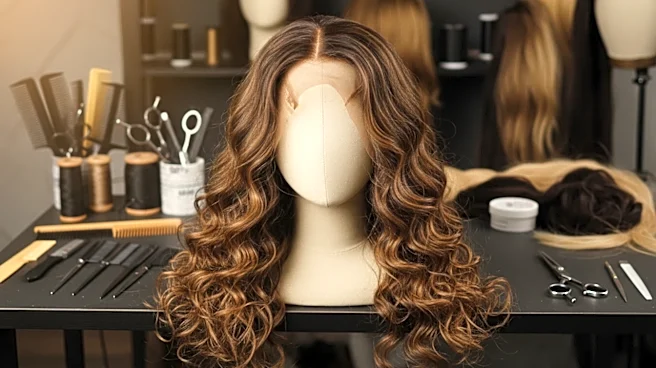
architects, collaborating with directors, costume designers, and the actors themselves to build a visual identity. The process is painstaking, often beginning with a custom mold of the actor's head made from cellophane and tape to ensure a perfect, seamless fit. Each strand of hair, whether human or synthetic, is then individually knotted onto a fine lace base in a process called ventilating, meticulously recreating natural growth patterns. This foundation allows them to tell a story before a single line of dialogue is spoken.
The Deep Dive for Authenticity
For period pieces, the artist's first role is that of a historian. They immerse themselves in research, scouring art, photographs, and even yearbooks to understand the nuances of a specific era. It's not just about the final shape; it's about understanding the social context, the available tools, and the regional differences that influenced how people wore their hair. Shows like "The Crown" are known for their meticulous replication of historical figures, where accuracy is paramount. This research informs everything from the texture of the hair to its color, which must be carefully calibrated to look correct under specific camera filters and lighting schemes. An artist might discover, for instance, that a 1960s Texas hairstyle looked completely different from one in New York during the same year.
The Problem with Perfect Accuracy
Herein lies the central conflict: a perfectly accurate historical hairstyle can sometimes look jarring, unflattering, or simply 'wrong' to a modern audience. What was fashionable in the 18th century might not translate well to an actor's face shape or the unforgiving detail of an HD close-up. As one wigmaker noted, modern audiences are so trained to contemporary aesthetics that anything even slightly askew in a modern-day story is immediately obvious; the same underlying principle applies to our perception of the past. A historically precise wig might be too severe, too flat, or have proportions that feel alien, pulling the viewer out of the story instead of drawing them in. The goal is believability, not necessarily a museum-quality reproduction that distracts from the performance.
Finding the 'Editorial' Sweet Spot
This is where editorial proportion comes into play. Wig designers must become interpreters, blending historical accuracy with creative license. They might keep the fundamental shape of a Regency-era updo but soften the lines or adjust the volume to better suit the actor. This blend is evident in shows like "Bridgerton," which uses historical silhouettes as a jumping-off point for more stylized, romantic creations. The hair department for "Queen Charlotte," for example, consciously worked within the period's shapes but incorporated centuries of Black hairstyles to create something new and representative. It’s a creative negotiation—honoring the spirit of the era while ensuring the overall look is cohesive, beautiful, and serves the narrative. The result is a style that feels authentic to the world of the story, even if it's not a direct copy of the past.
When Story Trumps History
Sometimes, the story demands that historical accuracy take a backseat entirely. A character's hair can be a powerful tool for expressing their personality, social standing, or inner turmoil. The fantastical, gravity-defying wigs in "Bridgerton," some featuring moving parts or anachronistic elements like Afro-inspired shapes, are designed to tell a story of wealth, power, and cultural identity within the show's unique universe. Similarly, a character in a historical setting might have a deliberately modern hairstyle to signify that they are rebellious or ahead of their time. In these cases, the wig isn't just an accessory; it's a piece of the script, a visual cue that communicates essential information to the audience without a word. The artistic choice becomes more important than the historical fact.