






Two Fathers, Two Fears
Before we can crown a champion of anxiety, we must define the terms. The parental fears in *Finding Nemo* and *Toy Story* are not the same; they attack from different fronts. In one corner, we have Marlin, the clownfish whose panic is visceral and external.
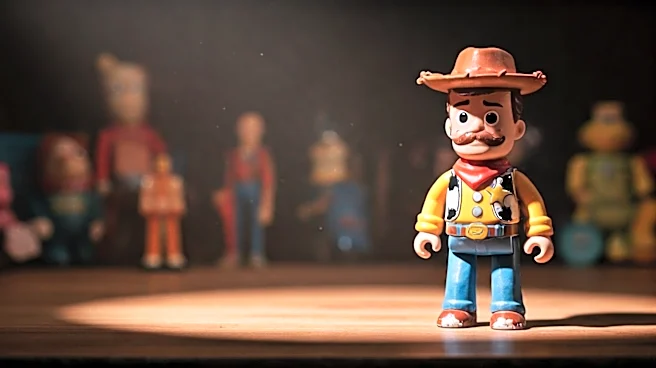
His world is fraught with tangible dangers—predators, boat propellers, dentists. His fear is for his child’s physical safety in a world that has already proven its capacity for random, devastating loss. In the other corner stands Woody. With the confirmation of *Toy Story 5*, his saga of existential dread continues. Woody's panic is internal and psychological. It’s the fear of being replaced, of becoming irrelevant, of his child growing up and no longer needing him. One is the panic of losing a child to the world; the other is the panic of losing a child to time.
The Case for Marlin: A Primal Scream
Marlin’s case is built on pure, uncut terror. The opening of *Finding Nemo* is arguably the most traumatic five minutes in the Pixar canon. A barracuda attack robs him of his partner, Coral, and all but one of their children. This isn't a metaphor; it's a brutal, foundational trauma that dictates his every move. His entire personality is a defense mechanism. He isn't just overprotective; he's pathologically so because he has seen the worst-case scenario play out in real-time. When Nemo is taken, Marlin's quest is not an adventure; it's a frantic, desperate scramble fueled by adrenaline and grief. He crosses an entire ocean, battles sharks, survives jellyfish fields, and rides the East Australian Current on the off-chance of recovery. This is the panic of a father who believes his child is facing certain death. It's loud, spectacular, and utterly exhausting.
The Case for Woody: A Slow, Quiet Ache
Woody’s panic is a quieter, more insidious poison. In the first *Toy Story*, it’s professional jealousy—the fear of being supplanted by a shiny new Buzz Lightyear. But by *Toy Story 2*, it matures into a deeper dread: the fear of being outgrown and abandoned. The entire plot is a referendum on his purpose. Does he belong in a museum, preserved forever, or with a child who will inevitably leave him behind? *Toy Story 3* elevates this to a heartbreaking crescendo. Andy is going to college. The panic is no longer a future possibility; it is a present reality. Woody’s desperate attempts to stay relevant, to hold onto his role, are painfully relatable to any parent watching their child pack for a dorm. His panic isn't a single event but a slow-motion crisis unfolding over more than a decade of Andy’s life. It’s the quiet dread of planned obsolescence.
The Verdict: The Terror of Time
Marlin’s journey is an explosive, terrifying sprint. But it has a clear finish line: finding Nemo. Once his son is safe, the acute panic can subside, even if the underlying anxiety never fully vanishes. He confronts his fear and learns to trust. Woody, however, is on a treadmill of existential dread. He “solves” his problem at the end of *Toy Story 3* by passing himself on to Bonnie, only to face a new flavor of the same panic in *Toy Story 4*—being left in the closet while another toy gets a turn. His core conflict is with the unstoppable passage of time, an enemy you can never outrun or defeat. Marlin’s fear is that something terrible *might happen* to his child. Woody’s fear is that something wonderful *will happen*: his child will grow up. While Marlin's panic is more immediately gut-wrenching, Woody's is the one that lingers long after the credits roll, because it’s a panic every parent is guaranteed to experience. For its relentless, evolving, and deeply psychological nature, the stronger parent panic belongs to Woody.