






The Anatomy of a Coaching Gamble
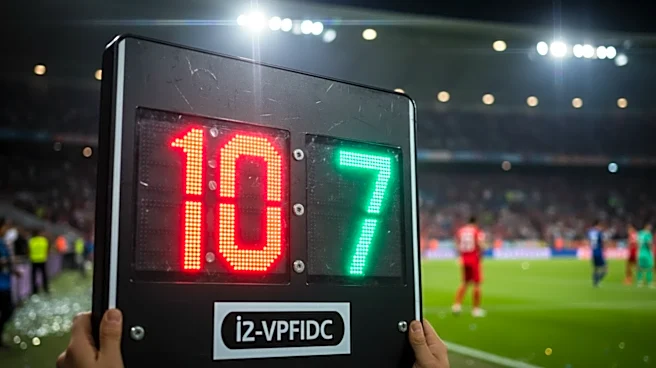
In soccer, the manager stands on the sideline, a frantic orchestrator who, for 90 or 120 minutes, has very few direct tools to influence a match once it begins. The substitution is their primary weapon. It’s a chance to change tactics, inject energy,
or, in the most nail-biting of scenarios, bring on a specialist for a single, decisive moment. But in a final, this decision is magnified a thousand times. Every player on the bench represents a different potential timeline. One choice could lead to a career-defining goal; another could lead to a catastrophic error. The pressure is immense, and the line between genius and scapegoat is razor-thin. The manager isn't just swapping one player for another; they are betting on one human's ability to handle a moment of suffocating pressure.
The Calculated Risk That Backfired
No case illustrates the substitution gamble more painfully than England manager Gareth Southgate in the Euro 2020 final. As the match against Italy at Wembley Stadium stretched into its 120th minute, destined for a penalty shootout, Southgate made his move. He brought on Marcus Rashford and Jadon Sancho, two players known for their penalty-taking prowess, who had barely played. It was a decision born of data and logic, designed to give England the edge. But the theory crumbled under the weight of reality. Coming into the intense pressure cooker of a shootout completely cold, both Rashford and Sancho missed their spot-kicks. When 19-year-old Bukayo Saka missed the final, decisive penalty, the focus snapped back to Southgate's late-game strategy. He took full responsibility, but his calculated risk had become a national heartbreak, a textbook example of how a logical decision can produce a devastatingly illogical outcome.
The Broken Hero's Final Stand
Sometimes the regret isn’t about who was brought on, but who was left on. At the 1994 World Cup final, Italy’s fate rested on the divine ponytail of Roberto Baggio. He had single-handedly dragged his team through the knockout rounds with a series of brilliant performances. But he did so at a cost, suffering a hamstring injury in the semifinal. Though a major doubt for the final against Brazil, Baggio insisted he could play. Coach Arrigo Sacchi was faced with a classic dilemma: trust a compromised superstar or opt for a fully fit, lesser player. He chose Baggio. It was a gamble on lingering magic that never materialized. Baggio was a ghost of himself in the stifling Pasadena heat, and after 120 goalless minutes, the game went to penalties. When Baggio stepped up for Italy's final kick and famously sent it over the crossbar, it became an iconic image of failure. The regret was born not from a late substitution, but from the initial choice to play a hero who was no longer able to save the day.
When the Unlikely Savior Arrives
For every story of regret, there is a tale of improbable glory that keeps managers rolling the dice. The Euro 2016 final offered the perfect counter-narrative. Hosts France were the heavy favorites against a Portugal side that had scraped its way to the final. Then, disaster struck for Portugal: their iconic captain, Cristiano Ronaldo, was forced off with an injury in the first half. As the game wore on, Portugal’s coach, Fernando Santos, sent on Eder, a powerful but un-fancied striker who had endured a forgettable spell in the English Premier League. He was not the man anyone expected to be the hero. But in the 109th minute of extra time, Eder muscled past a defender and unleashed a stunning long-range strike that flew into the corner of the net, winning Portugal its first-ever major trophy. It was a substitution that defied expectations and proved that sometimes, the most inspired decision is the one nobody sees coming.