



A Franchise Without a Slasher?
After the massive success of 'Halloween' (1978) and its 1981 sequel, creators John Carpenter and Debra Hill were done with Michael Myers. They felt his story was complete—he and Dr. Loomis were satisfyingly blown up at the end of 'Halloween II'. But the studio,
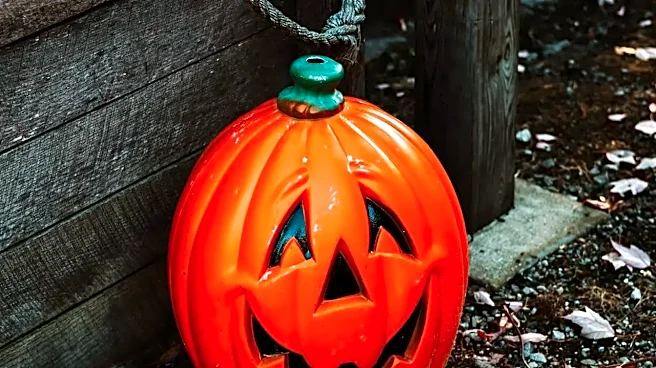
understandably, wanted to continue the profitable 'Halloween' brand. Carpenter and Hill agreed, but on one condition: they would transform the series into an anthology. The new vision was to produce a different, self-contained horror movie centered on the holiday each year. 'Halloween III: Season of the Witch' was the bold first step in that new direction, a proof of concept for a franchise that would be about the season, not just one slasher.
Witches, Robots, and Stonehenge
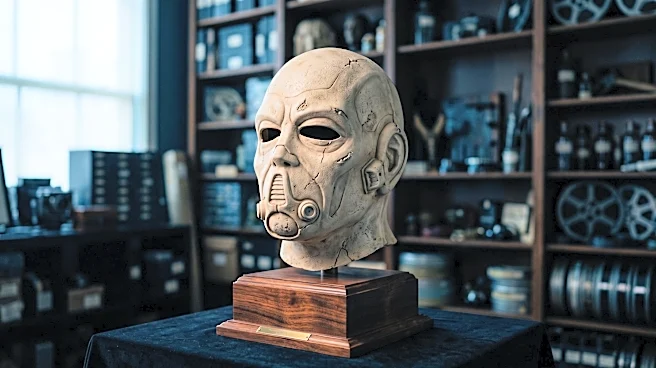
Instead of a masked killer stalking babysitters, 'Halloween III' delivered a bonkers plot that felt more like a sci-fi conspiracy thriller. The story follows a doctor (played by Tom Atkins) who uncovers a sinister plot by the Silver Shamrock Novelty Company. Its charismatic owner, Conal Cochran, plans to conduct a mass sacrifice on Halloween night using his popular Halloween masks. His scheme involves witchcraft, a stolen piece of Stonehenge, microchips embedded in the masks, and an army of android henchmen. The goal was to trigger an ancient Celtic ritual by airing a special commercial, causing the masks to melt the heads of millions of children. It was a far cry from the simple, terrifying suspense of Michael Myers, swapping a knife-wielding boogeyman for a corporate-sponsored apocalypse.
Where's Michael?
The marketing for 'Halloween III' was its biggest curse. By keeping the franchise name, audiences walked into theaters expecting another showdown with The Shape. What they got was a story where the original 'Halloween' movie is just a film playing on a TV in the background. The bait-and-switch left fans confused and angry. The backlash was immediate and fierce. Critics were largely negative, and the film became the lowest-grossing entry in the series at the time, making just $14.4 million at the box office. While not a total financial flop against its small budget, it was a major disappointment compared to its predecessors. The grand anthology experiment was declared a failure, and the producers quickly course-corrected, resurrecting Michael Myers six years later for 'Halloween 4: The Return of Michael Myers'.
The Last Laugh
For decades, 'Season of the Witch' was treated as a joke—the weird, failed sequel. But over time, something funny happened. Divorced from the expectation of being a Michael Myers movie, a new generation of fans and critics began to appreciate it on its own terms. Its ambition, strangeness, and bleak, nihilistic ending now stand out in a sea of repetitive slasher sequels. The film’s theme of corporate consumerism corrupting a holiday feels more relevant than ever. It has since earned a passionate cult following, with many now considering it one of the most creative and interesting films in the entire franchise. That earworm of a Silver Shamrock jingle, once a harbinger of audience disappointment, is now a celebrated piece of '80s horror nostalgia.