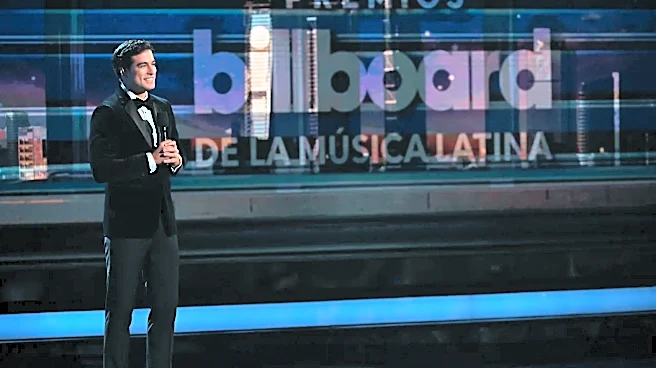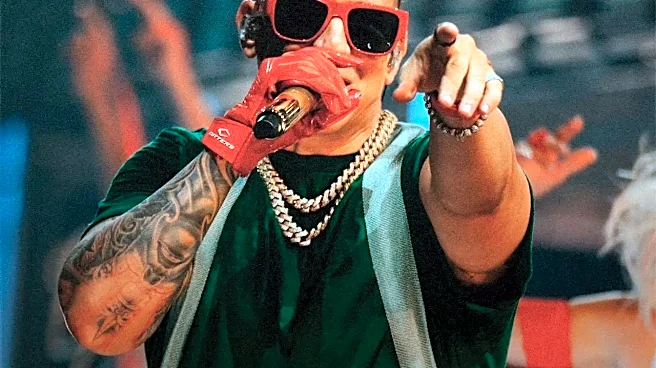



This week, the Latin Grammys will honor a man who didn't just join a genre, but built it. Daddy Yankee's journey from a Puerto Rican barrio to being named the 2026 Person of the Year is a masterclass in turning underground sounds into a global empire.
The Sound of the Caserío
Before he was the 'Big Boss', Ramón Luis Ayala Rodríguez was a kid from San Juan's Villa Kennedy housing projects with two dreams: baseball and music. A stray bullet from an AK-47 shattered his leg and his MLB aspirations, forcing him to pivot entirely to his other passion. In the early '90s, the sound that would become reggaeton was a raw, underground mixtape culture, stigmatized and often censored. It was here, on mixtapes by pioneers like DJ Playero, that Daddy Yankee cut his teeth, helping to coin the very term 'reggaeton' and fusing Spanish-language rap with Jamaican dancehall rhythms. He wasn't just making music; he and his peers were building an entire infrastructure out of necessity, creating their own marketing and distribution when no one else would touch the sound of the streets.
The 'Gasolina'-Fueled Explosion
If the '90s were about survival, 2004 was about world domination. That year, Daddy Yankee released 'Barrio Fino,' a landmark album that served as a cultural reset for Latin music. Its lead single, 'Gasolina,' was the catalyst. With an infectious, high-energy beat, it became an inescapable global anthem that introduced reggaeton to the mainstream. The song was revolutionary, becoming the first reggaeton track nominated for the Latin Grammy for Record of the Year. 'Barrio Fino' itself was a masterpiece, blending party anthems with sharp social commentary about life in the barrio. It became the best-selling Latin album of the 2000s, proving that the genre was not just a fad, but a powerful cultural and commercial force.
Building a Global Empire
Many artists would be defined by a hit as massive as 'Gasolina,' but for Daddy Yankee, it was just the beginning. He spent the next two decades cementing his status as a savvy businessman and an enduring hitmaker. He founded his own label, El Cartel Records, giving him creative and financial control that was rare in the industry. His influence is stamped all over modern Latin music, from his many collaborations with the next generation of stars like Bad Bunny and J Balvin to his monumental feature on Luis Fonsi's 'Despacito' in 2017. That track broke records globally, spending 16 weeks at No. 1 on the Billboard Hot 100 and becoming one of the most-streamed songs in history.
The Legend's Last Lap
In 2022, Daddy Yankee announced his retirement, launching a final album, 'Legendaddy,' and a farewell tour called 'La Última Vuelta' (The Last Lap). The move wasn't about fading away but about taking a victory lap and controlling his own narrative. The album itself was a tour through the styles that defined him, from classic reggaeton to trap and salsa experiments. At the final show of his tour in late 2023, he announced a new chapter, dedicating his life to his Christian faith. Yet, even in retirement, his presence looms large. A 2025 Bizarrap session brought him new nominations, showing his relevance is as strong as ever. The Latin Grammy tribute is a formal acknowledgment of what the world already knew: he is the architect of modern reggaeton.