




1. Embrace the 'Nothing to Lose' Mentality
In a knockout soccer match, a team trailing late isn't just losing; they're facing immediate extinction. Their season, their tournament, their dreams are minutes away from being over. This creates a powerful psychological shift. The fear of losing vanishes,
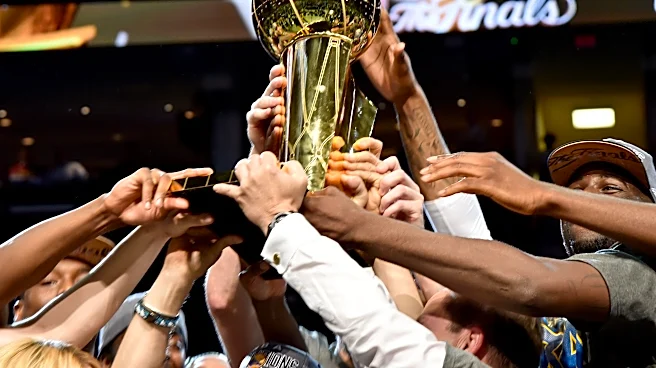
replaced by a desperate, liberating freedom. Players who were cautious suddenly make lung-busting runs and attempt audacious shots. The tactical playbook is thrown out in favor of pure, unadulterated effort. Think of a team needing two goals in the final five minutes of a World Cup match—they send their tallest defenders into the attack and play with a chaotic, beautiful abandon. For NBA fans, this is the equivalent of a team down 3-1 in a series. The pressure of expectation is gone. No one expects you to win anymore. This is the energy the 2016 Cleveland Cavaliers harnessed against a 73-win Warriors team. They weren't just playing to win; they were playing with house money, freed from the burden of being favorites. When a team has stared into the abyss and decided to just start shooting, they become exponentially more dangerous.
2. Unleash the Unlikely Hero
When the superstars are being swarmed and the game plan has failed, comebacks are often authored by the guys at the end of the bench. Soccer is famous for its 'super-subs'—players brought on late specifically to cause havoc. Think of Ole Gunnar Solskjær poking home the winner for Manchester United in the 1999 Champions League Final, or Divock Origi becoming a cult hero for Liverpool with clutch goals that defied his status as a role player. These aren't the primary goal-scorers; they are specialists in chaos, fresh legs against a tired defense, with a chip on their shoulder and a singular opportunity to become a legend. The NBA parallel is written all over playoff history. It’s Robert Horry, 'Big Shot Bob,' who was never the best player on his team but always seemed to hit the biggest shot. It’s Steve Kerr, coming off the bench to drain the series-clinching jumper for the Bulls in the '97 Finals. These players aren't shouldering the offensive load for 48 minutes, but they have the skill and mental fortitude to deliver in the one moment that defines a game or a season.
3. Weaponize the Opponent's Fear
A comeback isn't just about what the trailing team does right; it's about exploiting what the leading team does wrong. In soccer, this is called 'playing not to lose.' A team with a one-goal lead stops attacking, pulls its players back into a defensive shell, and tries to waste time. They become passive. This invites pressure, concedes possession, and allows the trailing team to build momentum. The crowd gets nervous, the passes get tentative, and suddenly, a comfortable lead feels like a crushing weight. NBA fans know this phenomenon all too well. It’s the team that builds a 20-point lead and then switches to a slow, isolation-heavy offense, hoping to just run out the clock. It's the star player who suddenly can’t hit a free throw because the pressure has mounted. The Golden State Warriors in the 2016 Finals, up 3-1, began to play with the weight of history on their shoulders. Every missed shot and turnover felt heavier. A great comeback artist doesn’t just focus on their own execution; they sense the fear in their opponent and ruthlessly attack it, turning the other team’s strength—their lead—into their biggest weakness.
4. The Mid-Game Tactical Masterstroke
Sometimes, raw emotion isn't enough. A legendary comeback often hinges on a single, brilliant coaching decision. In soccer, it could be a substitution that changes the team’s formation, a tactical switch that exposes a hidden weakness, or simply moving a player to a new position. Jürgen Klopp’s decision to push his full-backs into ultra-attacking roles for Liverpool or a manager bringing on a speedy winger to terrorize a tired defender can completely change the geometry of a match in an instant. This is the NBA’s chess match personified. It's a coach making the gutsy call to go to a small-ball lineup to create mismatches and increase pace, like the Warriors did to revolutionize the league. It's deploying a 'Hack-a-Shaq' strategy to disrupt rhythm or throwing a box-and-one defense on a superstar to force the other players to beat you. These aren't just lineup changes; they are calculated gambles that show the trailing team there's still a plan. It provides a surge of belief that can be just as powerful as a thunderous dunk, proving that the game can be won not just with heart, but with brains.