




A City of Individual Journeys
Before the burn, there is the week. Burning Man is not a typical festival where attendees are passive consumers of entertainment. It’s a temporary city built on principles of radical self-reliance, gifting, and decommodification. Participants, or "Burners,"
spend their days navigating a harsh desert environment, exploring a dizzying array of interactive art installations, attending workshops, and contributing to their theme camps. One person might spend an afternoon fixing their camp’s solar panels, while another serves grilled cheese to strangers from a mutant art car, and a third finds a quiet moment of reflection inside a bizarre, otherworldly sculpture. The experience is intentionally dispersed and intensely personal. It is a week defined by thousands of individual stories, a cacophony of adventures, struggles, and moments of connection that rarely overlap on a grand scale.
The Slow Pull to the Center
As Saturday approaches, a palpable shift occurs. The city’s sprawling, decentralized energy begins to coalesce. The conversations in camps and on art cars turn toward the evening’s main event. The Man, a massive wooden effigy standing at the heart of the city’s layout, transforms from a geographical landmark into a temporal one. He has been there all week, a silent observer, but now he becomes the destination. This slow gravitational pull unites the disparate tribes of Black Rock City. No matter what your week has been—whether it was euphoric, challenging, lonely, or transformative—Saturday night offers a common purpose. Everyone, from the first-time visitor to the grizzled veteran, is heading to the same place at the same time to witness the same spectacle. The individual journeys begin to merge onto a single, collective path.
A Symbol Ready for Meaning
The power of the Man Burn lies in the brilliant ambiguity of its central figure. The Man represents nothing officially. Since its origin as a spontaneous act of self-expression on a San Francisco beach in 1986, the effigy has served as a blank canvas. For some, he is a symbol of conformity, “The Man” of societal rules and expectations, and burning him is an act of rebellion. For others, he represents a past self they wish to let go of, a relationship that has ended, or a personal failure they need to release. Still others see the burn as a simple, awe-inspiring celebration of impermanence and the beauty of ephemeral art. This lack of a prescribed meaning is what allows tens of thousands of people, each carrying the weight of their own unique week, to find their own catharsis in the same column of fire.
One Moment, 70,000 Perspectives
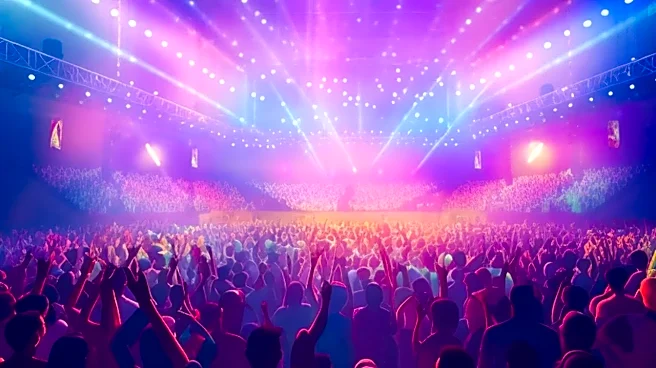
When the Man burns, it is the city’s emotional peak. The event is a full-blown sensory assault. A perimeter of wildly decorated art cars blast music, fire dancers perform intricate routines, and a breathtaking fireworks display lights up the desert sky. A collective roar rises from the crowd as the structure catches fire, a sound of pure, unadulterated release. In that moment, the 70,000 dispersed experiences of the week are forged into a single, undeniable memory. Everyone who is there shares it. The person celebrating a new beginning and the person mourning a deep loss are both watching the same flames, united by the sheer scale of the spectacle. The shared experience becomes the story, overriding the individual narratives and creating a communal touchstone that defines their time in the desert. The 2026 event's theme, "Axis Mundi," which explores the idea of a cosmic center that connects humanity, perfectly captures this unifying function.
The Shared Silence After the Roar
The Man Burn is a raucous, celebratory climax, but it is not the end. The following night features the burning of the Temple, an event that provides a poignant and necessary counterpoint. Where the Man Burn is a loud party, the Temple Burn is held in sacred silence. Throughout the week, participants fill the ornate Temple with messages, photos, and mementos honoring loved ones who have passed, expressing grief, or letting go of pain. Its burning is a quiet, solemn, and deeply emotional moment of collective mourning and reflection. This quiet finale underscores the function of the Man Burn. The Saturday spectacle is the collective shout, the peak of communal energy that allows a city of individuals to feel like a unified tribe. The Temple provides the space for a shared whisper, offering a different kind of unity—one found not in explosive joy, but in shared vulnerability and peace.