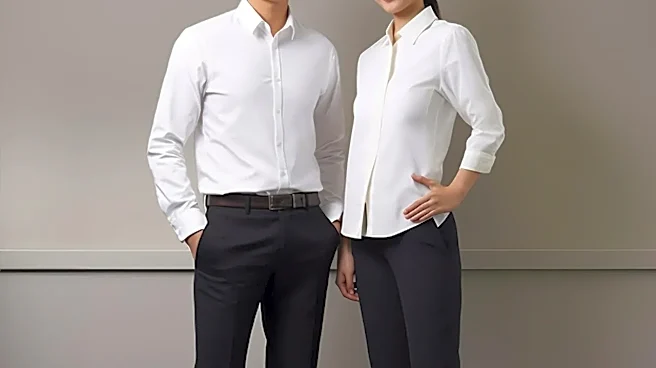








The 'Business Casual' Mirage
The term 'business casual' is perhaps the most confusing phrase in the American corporate lexicon. Originally intended to offer a relaxed alternative to the rigid suit-and-tie uniform, it has morphed into a source of anxiety. That’s because it’s not a specific
set of clothes, but a vague concept that varies wildly between companies, industries, and even departments. One company’s 'business casual' might be chinos and a polo shirt, while another’s includes dark-wash jeans and a blazer. The term’s ambiguity is its most defining feature. It began gaining traction in the 1990s, evolving from 'Aloha Fridays' in 1960s Hawaii and later 'Casual Fridays' as a low-cost morale booster during a recession. The problem is, it never came with a clear rulebook. What's allowed is often a moving target influenced by company culture, leadership styles, and client expectations, leaving newcomers to guess what 'professionalism' looks like. This ambiguity is why a safe bet for a first day or interview is often to dress one level above what you think is required.
The Tech Industry Rewrote the Rules (Sort Of)
The rise of Silicon Valley in the late '90s and 2000s appeared to obliterate the old dress code. Tech founders in hoodies and jeans famously rejected the stuffy aesthetic of Wall Street. But this didn't eliminate dress codes; it simply replaced one set of signals with another. The casual tech uniform became its own code, where the type of hoodie, the brand of minimalist sneaker, or the fit of the jeans sends a message about status and belonging. This concept, known as sprezzatura, is about looking effortlessly cool while concealing the art and thought behind it. For first-time shoppers, this is even more treacherous. A cheap, ill-fitting hoodie signals something very different from a tailored, high-end one. The tech world proved that even in a 'casual' environment, attire is a powerful form of communication about competence and cultural fit. The casual look is intentional, and failing to grasp that nuance can mark you as an outsider.
Your Zip Code Can Be Your Dress Code
A massive source of confusion is that there is no single 'American' business wardrobe. Professional attire is intensely regional. An outfit that reads as sharp and professional in a New York City finance firm would likely seem overly formal and stiff in a Los Angeles creative agency. Major hubs have distinct sartorial personalities. New York and Washington, D.C., lean conservative and formal, favoring dark, muted colors and structured suits. Conversely, West Coast cities like San Francisco and L.A. have a more relaxed approach, where high-quality casual wear is the norm. The South often blends traditional, preppier elements with business attire, while the Midwest can vary significantly from city to city. These regional norms mean that advice from a mentor in one part of the country may be completely wrong for a job in another. The only way to know for sure is to observe the local environment.
It’s Not the Clothes, It’s the Code
Here's the real reason the American business wardrobe is so tricky: it's not actually about the clothes. It's about demonstrating that you understand the unwritten rules of the environment you're in. Your outfit is a signal of social and cultural awareness. Dressing appropriately shows that you 'get it'—that you respect the context and can navigate its nuances without needing your hand held. Are you in a client-facing role? Dress to inspire confidence. Are you in a creative, collaborative setting? Dress to signal innovation and approachability. The underlying goal is always to look polished, intentional, and put-together, regardless of the level of formality. Items that are universally considered inappropriate—like ripped clothing, athletic wear, or anything poorly fitted—are rejected not because they are 'casual,' but because they signal a lack of care and attention to detail. Ultimately, your clothes should never be more memorable than your work.