



The Comfort Food of Fantasy
Let’s be honest about what “generic fantasy” usually entails. We love it, but we know the formula: a farm boy discovers he’s the chosen one, a wise old wizard offers cryptic advice, and a fellowship of heroes embarks on a quest to defeat an unambiguous,
monstrous evil. The action comes in broad strokes—sweeping battles, flashy magic, and sword fights where good and evil are as clearly defined as the shining armor and the spiky black iron. The narrative engine is forward momentum, a journey from Point A (the peaceful village) to Point B (the dark lord’s fortress). The conversations that happen along the way primarily serve to advance the plot or provide exposition about the magical MacGuffin of the week. It’s effective, comforting, and often spectacular. But it’s rarely complex.
Enter the Small Council Chamber
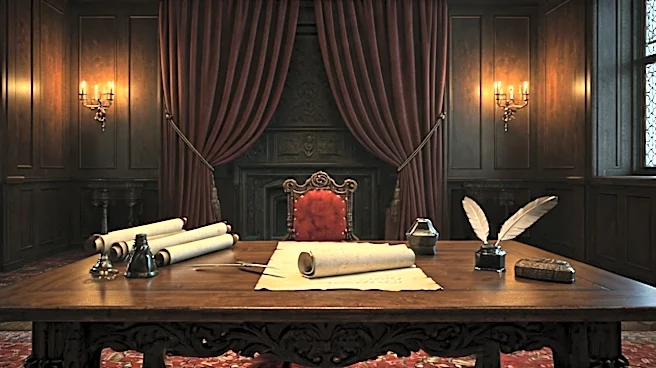
House of the Dragon doesn’t abandon spectacle—it has dragons, after all. But its true currency, the element that makes it feel so tense and vital, is the political negotiation scene. These are the moments set not on a battlefield, but in a claustrophobic room: the Small Council chamber, a private study, or a feast where every toast is a veiled threat. In these scenes, the weapons aren't Valyrian steel but words, whispers, and calculated silences. Characters aren't fighting orcs; they're jockeying for position, testing loyalties, and trying to win a war of succession decades before the first sword is even drawn. While other fantasy shows might summarize a political debate in a single line of dialogue before getting to the action, House of the Dragon makes the debate the action.
A War Fought With Words and Subtext
Think of the excruciating Small Council meetings under King Viserys. The central conflict isn’t good versus evil; it’s a dozen competing self-interests colliding at once. Otto Hightower’s quiet, poisonous suggestions, Corlys Velaryon’s proud indignation, and Rhaenyra’s frustrated attempts to be heard as heir—it’s all a masterclass in tension. The drama isn't in what is said, but what is left unsaid. A raised eyebrow from Larys Strong is more terrifying than a monster’s roar. The debate over who will inherit Driftmark is ostensibly about maritime law, but it’s actually about the legitimacy of Rhaenyra’s children, the ambition of the Hightowers, and the slow, painful decay of the king’s authority. These scenes demand that the audience lean in and pay attention to subtext, making viewers active participants in the courtly intrigue. The most powerful person in the room is often the one who says the least.
Why These Quiet Rooms Matter
This focus on verbal sparring and political maneuvering is what separates the show from its peers. It grounds the fantastical world in a recognizable, deeply human reality: the pursuit of power. The show argues that history isn't shaped by chosen ones, but by committee meetings, backroom deals, and the personal resentments that fester over years. The Targaryen dynasty doesn’t begin to crumble because of a prophecy or an ancient evil; it rots from the inside, in quiet rooms where men and women trade influence and nurse grudges. By making us sit through these tense, uncomfortable negotiations, the show ensures that when the violence finally erupts, it feels not like a thrilling spectacle, but a tragic, inevitable failure. We’ve witnessed every missed opportunity for peace, every handshake that wasn’t trusted, and every compromise that was rejected. The dragons are the consequence, not the cause.