



An Epic Visual Shorthand
When a new fantasy series wants to convey scale, legacy, and the sheer weight of history, it often reaches for the modern gold standard: Peter Jackson’s cinematic interpretation of “The Lord of the Rings.” It’s a visual language every fantasy fan understands.
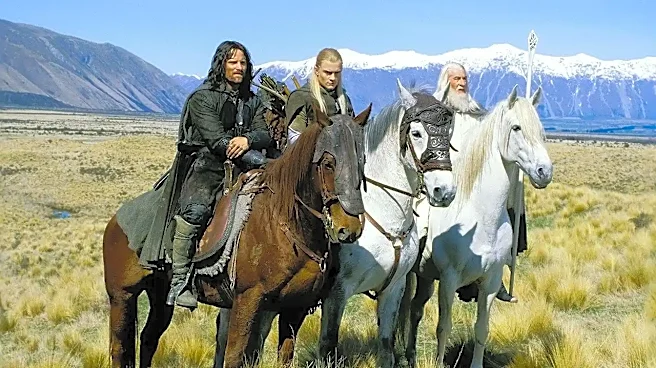
A lone rider cresting a hill against a vast mountain range isn’t just a pretty picture; it’s a nod to Aragorn, to the Fellowship, to a journey of immense importance. The recent finale of “House of the Dragon” leaned into this lexicon heavily as it set the stage for the Dance of the Dragons. The sweeping aerial shots of Dragonstone, cloaked in shadow and dread, evoke the same feeling as the first glimpses of Mordor or the foreboding peaks of Caradhras. The showrunners know that by tapping into this shared visual memory, they can instantly communicate the gravity of the coming war without having to spell it out. It’s an efficient, effective way to tell the audience: the stakes are now as high as they get.
The Gathering Storm
The most direct parallels appear in the “march-to-war” imagery itself. In “The Lord of the Rings,” the mustering of an army is a moment of both dread and awe. Think of the Uruk-hai leaving Isengard—a terrifying display of industrial evil—or the breathtaking lighting of the beacons, a signal of desperate hope cascading across a kingdom. “House of the Dragon” mirrors this, but with a crucial, cynical twist. We see shots of ships being loaded, soldiers gathering in courtyards, and war maps being studied in dimly lit chambers that feel lifted straight from Rivendell or Minas Tirith. Yet, the armies gathering here are not united against a singular, external evil. They are preparing to slaughter each other over a dynastic squabble. The iconic shot of a commander staring out at their assembled forces, a classic hero pose, is given to characters like Daemon Targaryen, whose motivations are murky at best. The visual grandeur is the same, but the moral clarity is gone.
Characters Forged in Fire
The parallels extend to the characters themselves, who are often framed in ways that recall Tolkien’s heroes, even if their souls are far grayer. Rhaenyra Targaryen, burdened by a prophecy and a stolen crown, is often positioned as an Aragorn-like figure—the reluctant monarch forced to embrace a war they never wanted. Shots of her brooding alone, weighing the cost of conflict, are visually similar to Aragorn’s moments of quiet contemplation before battle. But where Aragorn’s struggle was with his own self-doubt against a backdrop of clear righteousness, Rhaenyra’s is a battle against her own worst impulses in a world where every choice is a compromise. By dressing a deeply flawed, complex character in the visual costume of a classic hero, the show creates a powerful dissonance. It asks us if heroism is even possible in a world as messy and compromised as Westeros.
A Subversive Homage
Ultimately, these echoes of “The Lord of the Rings” are more than just a simple homage or a lack of imagination. They are a deliberate thematic choice. “The Lord of the Rings” is a story about the victory of hope over despair, of fellowship over tyranny. It is, at its core, a profoundly moral tale. “House of the Dragon,” and the world of George R.R. Martin at large, is a story about the corrupting nature of power and the cyclical, self-destructive patterns of humanity. By borrowing the epic, often beautiful visual language of a story about good versus evil and applying it to a story about a family tearing itself apart, the finale offers a stark piece of commentary. It suggests that the grand gestures of war—the soaring dragons, the marching armies, the stoic leaders—can mask a rotten core. The epic imagery makes the tragedy feel even more profound, reminding us that even the noblest-looking conflicts are often just ugly family feuds writ large.