





The Eternal Shadow of the 'S'
For decades, Supergirl has struggled for air in the shadow of the world’s most famous superhero. On screen and often on the page, her story has been inescapably tethered to Clark Kent’s. She is the cousin, the surprise relative, the alternate, the sidekick,
or the stand-in. The CW’s *Supergirl* spent much of its early run grappling with this, constantly referencing the “big guy” in Metropolis. Even when she found her footing, the narrative often centered on her journey to escape that comparison. Other adaptations reduce her to a plot device—a way to explore a different facet of Superman’s legacy. Is she more alien? Is she angrier? These are valid questions, but they start with the wrong premise. They define her in relation to him, making her a supporting argument in his thesis statement. This isn't character development; it's character contrast. For the DCU to feel fresh, it has to break this cycle.
A Fundamentally Different Survivor
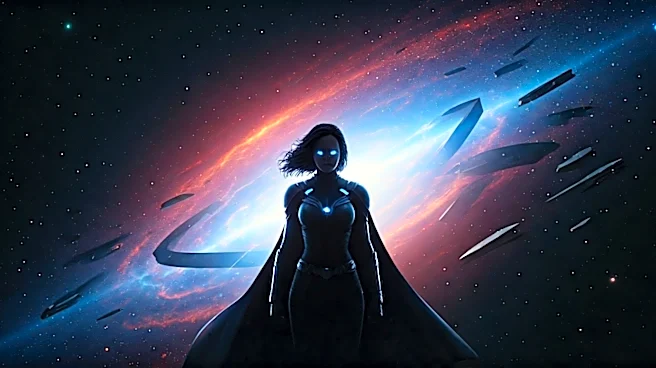
The key to unlocking Kara Zor-El is understanding that her origin story is the tragic inversion of her cousin's. Clark Kent was an infant sent from a dying world he never knew. He was raised by loving parents on a Kansas farm. His story is that of an immigrant who embraces his new home and becomes its ultimate protector. Kara’s is a horror story. She was a teenager on Krypton. She had friends, a family, a culture. She remembers the sky turning red and the ground cracking beneath her feet. She watched everything she ever loved burn. While Clark’s pod landed safely, hers was knocked off course, trapping her in suspended animation while she drifted through the cold void of space. She arrived on Earth years later, a traumatized refugee in a world that wasn't hers, only to discover the baby she was sent to protect was now a grown man who didn't need her. He is an idealist who believes in humanity; she is a survivor who has every reason not to.
The 'Woman of Tomorrow' Blueprint
This is precisely why James Gunn’s choice of source material, Tom King and Bilquis Evely’s *Supergirl: Woman of Tomorrow*, is so inspired—and so risky. The comic series leans directly into this darker, more complex origin. It presents a Kara who, after years of trying to be the hero Earth wants, is jaded and adrift. Having just turned 21, she finds herself on a remote alien planet, drinking in a dive bar, when a young girl seeks her help on a mission of revenge. What follows is not a bright, optimistic tale of superheroics. It's a gritty, sci-fi space Western about a weary warrior grappling with her rage and grief. King’s version of Kara isn't “Superman’s cousin”; she’s a character forged in loss, more akin to a battle-hardened veteran than a hopeful icon. She’s not mean or evil, but she is tired, cynical, and carries the weight of a dead planet on her shoulders. This is the “not Clark Kent” angle in its purest form—a character study, not a comparison.
The DCU's Real Litmus Test
Adapting this story faithfully is the ultimate test for Gunn’s new DCU. He has promised a universe where tone shifts from project to project, from the dark detective noir of *The Batman* to the hopeful heroism of his own *Superman*. *Supergirl: Woman of Tomorrow* is the perfect vehicle to prove that claim. The temptation will be to soften her edges, to make her more palatable, more… like Clark. To give her a sunny disposition and reduce her cosmic journey to a colorful romp. Doing so would be a catastrophic failure, signaling that the new DCU, for all its promises, is still afraid to let its characters be truly different. If they nail it—if they give us the hardened, complex, and deeply human Kara from the comics—it will be the strongest possible statement that this DCU is built on character first. It will prove they understand that a shared universe thrives on distinct personalities, not a homogenous house style. Supergirl isn't there to make Superman look good; she’s there to tell her own story.