
The 'No Hugging, No Learning' Revolution
In the landscape of 90s television, most sitcoms ended with a warm resolution. Characters learned a lesson, conflicts were smoothed over, and the family unit was reaffirmed. Then came Seinfeld, armed with a simple
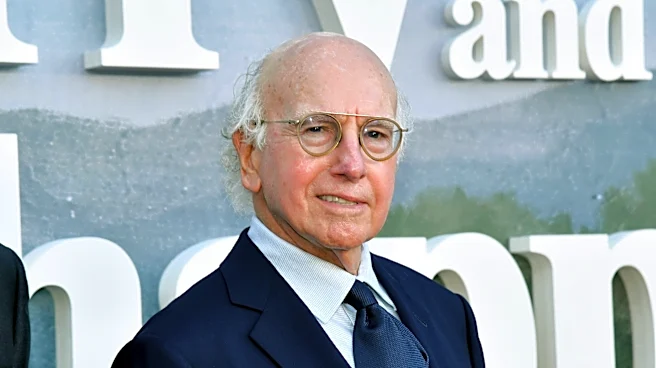
but radical philosophy: “no hugging, no learning.” Guided by creators Larry David and Jerry Seinfeld, the show deliberately rejected the moral-of-the-story endings that defined the genre. The four main characters—Jerry, George, Elaine, and Kramer—were not there to grow as people. They were petty, narcissistic, and hilariously unapologetic about it. Instead of resolving their issues, they remained best friends the next week, ready to screw each other over again. This was revolutionary. It gave audiences permission to laugh at the characters' terrible behavior without waiting for a redemptive arc that would never come. Shows like It's Always Sunny in Philadelphia and Curb Your Enthusiasm, which are built entirely on the premise of relentlessly selfish people, owe their existence to this breakthrough. Seinfeld proved that characters didn't have to be likable to be watchable; they just had to be funny.
The Architecture of 'Nothing'
The phrase “show about nothing” was a meta-joke from the show itself, but it fundamentally misunderstood the series' genius. It wasn't about nothing; it was about the millions of tiny, mundane, and infuriating things that make up daily life. Waiting for a table at a Chinese restaurant, losing your car in a parking garage, or navigating a socially awkward conversation became the A-plots. Before Seinfeld, these were the spaces between scenes, not the scenes themselves. The show’s true innovation was its intricate narrative structure. While traditional sitcoms had an A-story and a B-story, Seinfeld often juggled four separate plotlines, one for each character. These seemingly unrelated threads—George trying to get out of a commitment, Elaine dealing with an annoying coworker, Kramer launching a bizarre scheme, and Jerry observing it all—would brilliantly and often catastrophically converge in the final minutes. This complex, quick-cutting style was a forerunner to the frenetic pacing of shows like Arrested Development and 30 Rock.
The Gospel of Observational Humor
At its core, the show was about how a comedian gets his material. Jerry Seinfeld’s stand-up segments, which opened and closed most episodes in the early seasons, were directly linked to the episode's themes. This structure essentially turned the entire half-hour show into an elaborate setup for a punchline about everyday annoyances. It elevated observational humor from a stand-up technique to a dominant form of television comedy. By turning a magnifying glass on life’s minutiae, the show created a new public lexicon. Phrases like “yada yada yada,” “no soup for you,” and “master of their domain” entered the vernacular, giving people a shared language for universal experiences. This focus on the funny side of triviality also pushed boundaries. An entire episode about a contest of self-denial (“The Contest”) managed to become a cultural landmark without ever explicitly saying the word “masturbation,” a masterclass in subverting censorship.
The Late-Night Connection
While Seinfeld’s impact on the sitcom is obvious, its influence seeped into other formats, especially late-night television. The show's DNA is rooted in stand-up, particularly the observational, slightly detached, and often meta-humor that Jerry Seinfeld and Larry David perfected. Late-night comedy, which had long been dominated by the classic Carson model of monologue and softball celebrity interviews, began to absorb this sensibility. The rise of hosts who were themselves comedy nerds—like Conan O’Brien and later Jon Stewart and Stephen Colbert—mirrored this shift. Their comedy became more deconstructive, more self-referential, and more focused on the absurdities of the world around them, much like an episode of Seinfeld. The idea of taking a small, seemingly insignificant detail and blowing it up into a major comedic bit is a staple of modern late-night. Seinfeld didn't invent this style of comedy, but it mainstreamed it on a massive scale, proving that audiences were hungry for smart, cynical, and observant humor.