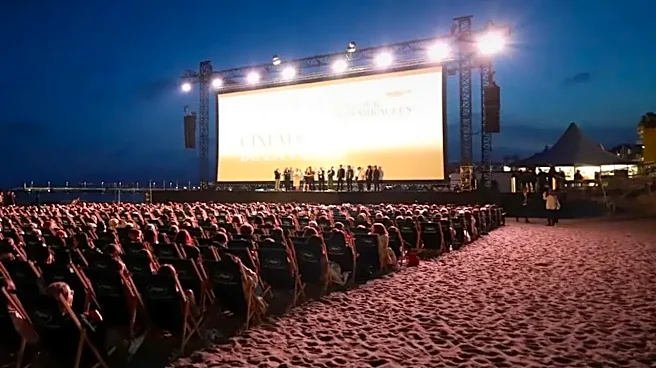










The Vibe: Exclusive Retreat vs. Urban Sprawl
Telluride, held over Labor Day weekend, is defined by its location: a small, isolated box canyon town in Colorado. It fosters an intimate, summer-camp-for-cinephiles atmosphere where filmmakers, executives, and passionate movie lovers mingle in the same
lines. There are no red carpets, and the vibe is deliberately casual and egalitarian. This exclusivity is its brand. Passes sell out long before anyone knows what will be shown. Toronto, which begins just after Telluride ends, is the opposite. It's a massive, sprawling public festival set in the heart of Canada's largest city. With hundreds of films on offer, it’s built for accessibility, drawing enormous public crowds alongside a global media contingent. Where Telluride feels like a secret handshake, TIFF is a city-wide celebration of cinema, complete with red carpets, fan zones, and a palpable big-event buzz.
The Lineup: Secret Surprise vs. Public Spectacle
Telluride's most famous tradition is its secrecy. The festival lineup is not revealed until just before the festivities begin, a gimmick that has become a core part of its mystique. Attendees arrive on faith, trusting the curators to deliver a small, exquisitely chosen slate of films. This strategy positions every screening as a potential discovery. Because an informal rule requires films to be North American premieres, the festival often serves as the first stateside look at titles that may have just debuted at Venice.
Toronto operates on a model of maximum hype. Its schedule, featuring nearly 300 films for its 2026 edition, is announced in rolling waves over the summer. This allows studios and publicists to build awareness for weeks leading up to the event. Instead of a curated handful of surprises, TIFF offers a comprehensive showcase of the fall's most anticipated movies from around the globe, making it a one-stop shop for anyone wanting a preview of the cinematic season ahead.
The Mission: A Critical Launchpad vs. A Global Marketplace
At its core, Telluride is a festival for film lovers, designed to generate critical buzz. It has no official competition or juries, so the only prize is the enthusiastic word-of-mouth that travels down the mountain. This is where a small film like Moonlight can premiere quietly and emerge as an awards heavyweight based on sheer critical passion. It’s a place to anoint a film with prestige before it faces the broader industry.
Toronto, by contrast, is a full-blown market. While it's also a public festival, it hosts one of the most significant sales markets for films, a place where distribution deals are made. In 2026, TIFF is even launching a more formalized market to strengthen its industry standing. Its most influential prize, the People's Choice Award, is voted on by the public and is a famously reliable predictor of which films have the broad appeal needed for a Best Picture nomination. Winning here, as films like Green Book and American Fiction did, proves a film can connect with a wide audience.
The Awards Strategy: The Whisper vs. The Megaphone
For a film studio, choosing between the two (or doing both) is a key strategic decision. A Telluride premiere is a boutique launch. It’s a way to introduce a film to a concentrated group of influential critics and tastemakers, hoping to build an unimpeachable critical foundation. The initial reviews and reactions from Telluride can set the entire narrative for a film's awards campaign.
Going to Toronto is using a megaphone. It’s about amplifying a message to the world’s media and testing a film's commercial and popular appeal. While smaller films can get lost in the shuffle of TIFF's massive program, it's an unparalleled platform for a film that is ready for its close-up. For many films, the dream route is a one-two punch: debut to the cinephiles at Telluride and then immediately ride that wave of buzz into the massive media and audience engine of Toronto a few days later.