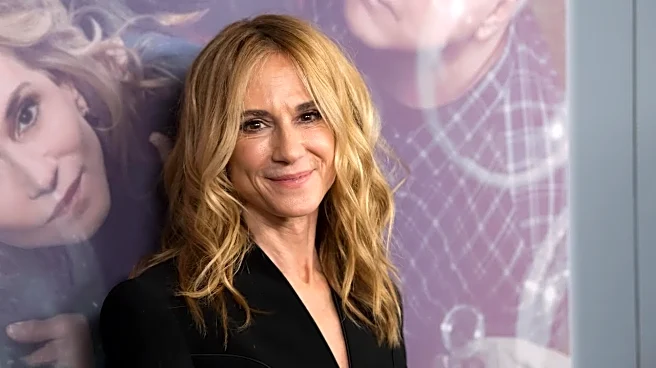







Every family has its own brand of holiday chaos, but few films capture it with the frantic, funny, and deeply human touch of 'Home for the Holidays'. At the heart of this storm is Holly Hunter’s Claudia Larson, the anchor in the madness.
The Relatable Eye of the Storm
Claudia Larson
isn't a hero returning in glory. As the film opens, she’s been fired from her museum job, has an awkward make-out session with her boss, is fighting a cold, and learns her teenage daughter plans to spend Thanksgiving losing her virginity. Her journey home to Baltimore isn't triumphant; it's a reluctant retreat. This is the first and most crucial way Hunter grounds the film. She plays Claudia not as a judgmental observer but as a weary participant who has simply reached her limit. The audience immediately latches onto her because her exhaustion feels universal. We see the impending family drama through her eyes, making her our surrogate in a vortex of eccentric relatives and simmering resentments. She’s the person asking the questions we’re thinking, and her plea to her mother on the phone—to please not ask her any questions—is a sentiment understood by anyone who has ever gone home for the holidays under a cloud.
A Portrait of Quiet Desperation
What makes Hunter’s performance so masterful is its restraint. She doesn’t get the explosive monologues of her puckish brother, Tommy (Robert Downey Jr.), or the brittle, passive-aggressive perfectionism of her sister, Joanne (Cynthia Stevenson). Instead, Hunter’s Claudia operates in a state of controlled panic. Her face during the infamous turkey carving scene, which ends with the bird landing in Joanne’s lap, is a masterclass in silent suffering. She conveys a lifetime of family dynamics in a single eye-roll or a deep, resigned sigh. This isn't a character who has it all figured out. She’s messy, vulnerable, and just as capable of being childish as her siblings. This fallibility is essential. By making Claudia imperfect, Hunter makes her real. She isn't an idealized saint tolerating her crazy family; she’s just one of them, trying desperately to keep her head above water.
The Familial Fulcrum
Claudia acts as the connective tissue between the film’s wildly different personalities. She is the confidante for her mischievous gay brother, Tommy, sharing a bond that feels authentic and lived-in. Their shared humor is a shield against the rest of the family’s anxieties. She is the target of her sister Joanne’s buttoned-up judgment, representing a more freewheeling life that Joanne both resents and envies. With her parents, the loving but neurotic Adele (Anne Bancroft) and the quietly goofy Henry (Charles Durning), she oscillates between being a grown woman and a frustrated teenager. Hunter navigates these dynamics with incredible precision. Her reactions ground each of the other characters, making their eccentricities feel like part of a believable, if dysfunctional, whole. Without her as the pivot point, the film could easily devolve into a series of wacky sketches. Claudia holds the center.
Surviving, Not Solving, the Chaos
The film, directed by Jodie Foster, wisely avoids a neat, tidy ending. The family doesn't magically resolve its deep-seated issues over a piece of pumpkin pie. The tensions don't disappear. Instead, Claudia finds something smaller and more meaningful: a moment of grace and a potential new beginning with Leo (Dylan McDermott), the handsome and good-natured stranger Tommy brought home to meet her. The film argues that the goal of the holidays isn't to solve your family's problems, but to survive them with your sanity and sense of humor intact. Hunter’s performance is the vessel for this message. Her journey ends not with a grand victory, but with a quiet sense of acceptance and the faint glimmer of hope. It’s a profoundly realistic and comforting conclusion that solidifies the movie's status as a cult classic.