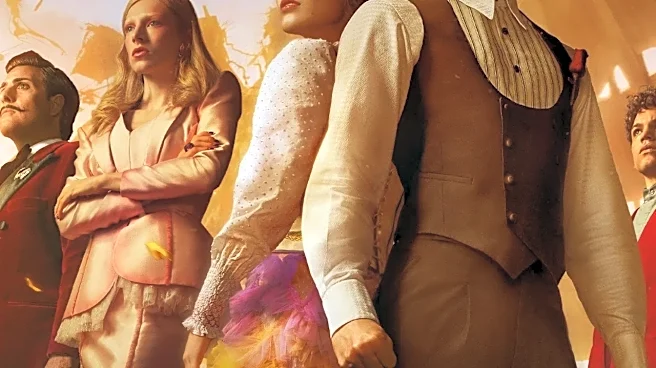







For decades, the golden rule of fandom has been simple: read the book before you see the movie. But with Haymitch Abernathy’s backstory on the horizon, a surprising number of 'Hunger Games' fans are planning to break that sacred pact.
A Story Steeped in Dread
To understand this
reversal, you have to understand Haymitch. His story isn't one of heroic discovery; it's a known tragedy. Long before Katniss Everdeen volunteered as tribute, fans knew her mentor, Haymitch Abernathy, was the lone victor of the 50th Hunger Games, a brutal event known as the Second Quarter Quell where the Capitol demanded twice the usual number of tributes. We know he wins, but we also know it costs him everything. As revealed in the original trilogy, President Snow murders Haymitch's mother, brother, and girlfriend as punishment for the clever way he won his Games. This isn't a story about 'if' he'll win, but about 'how' he'll lose everyone he loves. That foreknowledge has filled the lead-up to the new book and movie, 'Sunrise on the Reaping', with a sense of dread rather than simple anticipation. The story is, by its very nature, heartbreaking.
The Movie as an Emotional Shield
For many, watching the film first is a form of emotional preparation. A movie, even a dark one, offers a degree of separation. The experience is guided by a director, filtered through performances and a score, and contained within a two-to-three-hour runtime. Reading the book, conversely, means living inside Haymitch’s head for hundreds of pages, experiencing his trauma, his fleeting hopes, and his devastating losses in first-person detail. For a narrative this grim, some fans see the film as a way to process the sharpest edges of the trauma visually before immersing themselves in the character's internal suffering. In online fan forums, readers express a desire to let the film deliver the initial shock, making the subsequent reading experience a deeper dive into the 'why' and 'how' rather than a brutal, unfiltered plunge into despair. It's a pragmatic approach to consuming a story they know will be emotionally taxing.
When Spoilers Aren't the Point
The usual arguments about spoilers become moot with Haymitch's prequel. The ending is one of the most established pieces of lore in the 'Hunger Games' universe. We know the outcome. The narrative tension comes from the journey—the specific moments of horror and defiance that lead to his hollow victory. Because the core plot points are already public knowledge for anyone familiar with the series, the 'book purist' stance loses some of its power. The desire is not to protect the surprise of the plot, but to manage the emotional impact of its execution. Seeing the story play out on screen, with actors embodying the roles, can create a framework that makes the more intimate, psychological horror of the novel more bearable. The film provides the map of the tragedy; the book then provides the detailed, painful tour.
A New Kind of Fandom Pragmatism
This isn't a case of fans devaluing Suzanne Collins' source material. In fact, it stems from a deep attachment to the character and a respect for the darkness of his canon story. In previous adaptations, like the original trilogy or even 'The Ballad of Songbirds & Snakes', the primary excitement was seeing a beloved story brought to life. With 'Sunrise on the Reaping', the dynamic has shifted. The film is being viewed as a partner in any storytelling experience—a tool to help navigate what might be the bleakest entry in any series yet. It marks a fascinating evolution in fan culture, moving from a rigid adherence to 'book first' to a more pragmatic, emotionally intelligent approach to engaging with a difficult, but essential, piece of a cherished fictional world.