


The Old Days of Brute Force
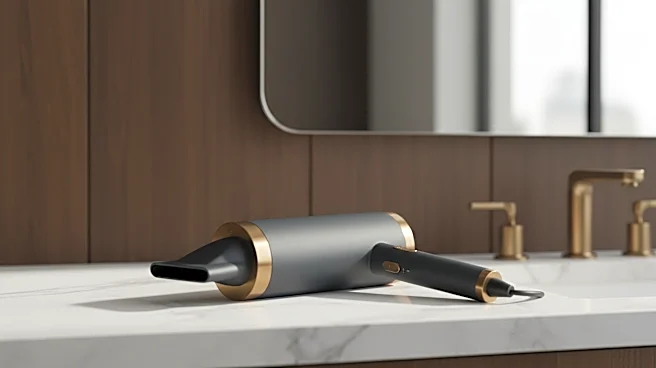
Not long ago, the primary technology in a hair dryer was brute force. Early handheld models that gained popularity in the mid-20th century were often heavy, loud, and operated on a simple principle: blast hair with high heat until it was no longer wet.
For those with fine or short hair, this was manageable. But for people with thick, dense manes, it was a battle against time and heat damage. The approach was to evaporate water, but intense, uneven heat often cooked the hair cuticle, leading to frizz, brittleness, and split ends. These dryers were capable of getting the job done, eventually, but the cost was the health and integrity of the hair itself.
The Ionic Revolution
The first major shift came with a bit of clever science: ionic technology. The concept is that the dryer releases a stream of negative ions that interact with the positively charged water molecules in your wet hair. Instead of just relying on heat to evaporate big droplets, these negative ions break them down into smaller micro-droplets that evaporate much faster. For thick hair, this was a game-changer. It dramatically cut down drying time, which meant less heat exposure overall. More importantly, by neutralizing the positive charge that causes static and frizz, ionic dryers leave the hair's cuticle sealed and smooth, resulting in a shinier, healthier-looking finish.
It's All in the Materials
The next quiet innovation happened inside the dryer itself. Manufacturers moved away from basic metal heating elements to materials like ceramic and tourmaline. Ceramic components are prized for their ability to heat up evenly and produce a more gentle, far-infrared heat. This prevents the “hot spots” that scorch hair. Tourmaline, a crushed semi-precious mineral, took things a step further. When heated, it naturally produces a massive amount of negative ions, amplifying the effects of ionic technology and further reducing frizz and drying time. A dryer using a combination of these materials could dry thick hair quickly without frying it, a balance that older models could never achieve.
A Smarter, Quieter Motor
The heart of any dryer is its motor, and for decades, they were heavy and inefficient. The most recent leap forward is the adoption of brushless DC (BLDC) motors. Traditional motors rely on physical carbon brushes to run, which create friction, wear out over time, and are incredibly noisy. Brushless motors use magnets and electronics, making them significantly lighter, quieter, and more durable. For the user, this means less arm fatigue during a long drying session. More critically, these motors can generate a much higher velocity of airflow, physically blasting water off the hair instead of just baking it off. This combination of high speed and lower heat is the key to a fast, damage-free blowout for even the thickest hair.
How Niche Became the Norm
Here’s how the revolution happened quietly: these technologies were first developed and marketed as solutions for the most challenging hair types—thick, curly, and frizz-prone. But their benefits were universal. Who doesn't want a faster, quieter drying experience that leaves hair healthier and shinier? As consumers became more educated, features like ionic technology, ceramic coils, and powerful-yet-lightweight motors went from expensive, salon-grade novelties to standard expectations. Even attachments like diffusers, once used only for curls, and concentrator nozzles, essential for sleek styles on thick hair, are now included as standard, acknowledging that one size doesn't fit all. The tools built to solve the thick hair problem ended up raising the bar for everyone, fundamentally reshaping what we expect from a simple hair dryer.