




The Stage, The Dream, The Terror
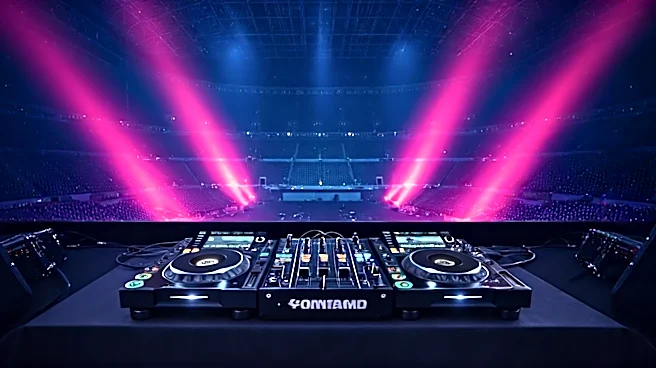
Imagine the scale. You’re not just at a festival; you’re at the Electric Daisy Carnival, North America’s largest electronic music mecca. You're standing on a stage like cosmicMEADOW or circuitGROUNDS, structures so vast they feel like monuments from a sci-fi
film. The pyrotechnics are primed, the LED screens are a universe of color, and the sound system is powerful enough to be felt in your bones. For any DJ who has spent years grinding in clubs and on SoundCloud, this is the validation. It’s also terrifying. The pressure is immense. Your name is on a lineup next to legends. Your set is being live-streamed to hundreds of thousands more. Every transition will be scrutinized, every track selection judged. In this high-stakes environment, the natural human impulse is to control every possible variable.
The Comfort of the Perfect Plan
This is where the temptation begins. To combat the fear, a first-time main-stage DJ will often retreat to what feels safest: a meticulously pre-planned set. We’re not talking about having a few key tracks in mind. We’re talking about a locked-in, sixty-minute-long playlist, practiced in the studio for weeks, with every transition mapped out to the millisecond. On paper, it seems like the professional thing to do. It’s a bulletproof plan designed to showcase technical perfection. It removes the risk of fumbling a mix or drawing a blank on what to play next. You can sync visuals perfectly and ensure your new single gets dropped at the 27-minute mark, just as planned. This pre-packaged performance is a security blanket in the face of a potentially overwhelming crowd. And this is the setup for the big mistake.
The Mistake: Playing a Mixtape
The mistake isn’t planning. The mistake is executing that plan blindly, regardless of the reality in front of you. It’s performing a monologue when DJing is supposed to be a conversation. You’re essentially pressing play on a very elaborate mixtape, treating the thousands of living, breathing people in the crowd as a passive audience for a pre-recorded show. What does this look like from the dance floor? It feels disconnected. It’s the DJ who drops a high-energy banger when the crowd is clearly catching its breath after the last peak. It’s the one who plays a slow, atmospheric build-up while the audience is surging with energy, begging for something to jump to. The set might be technically flawless, but it lacks soul. The energy on the dance floor becomes a secondary concern to the DJ's pre-written script. The performance is happening *at* the crowd, not *with* them. Instead of a shared experience, it’s just noise being broadcast from a stage.
The Real Art: Reading the Room
The true legends of the craft, from Carl Cox to A-Trak, are celebrated not just for their track selection but for their ability to read and react. They come prepared, but not imprisoned. They have crates of music—thousands of tracks—ready for any scenario. They watch the crowd. Are people dancing? Are they heading for the exits? Are they pulling out their phones because they’re bored or because they want to capture an incredible moment? A great DJ plays a track, sees the reaction, and lets that reaction inform the next choice. It’s a dynamic feedback loop. Think of it like a great comedian. They have a solid hour of material, but if a certain joke doesn't land, they don't stubbornly tell five more just like it. They pivot. They interact. They feel the energy of the room and adjust their timing and delivery. A DJ set on a massive stage is the same. The goal isn't to perfectly execute a routine; it’s to create a collective moment of euphoria. That requires flexibility, intuition, and the courage to deviate from the plan.