



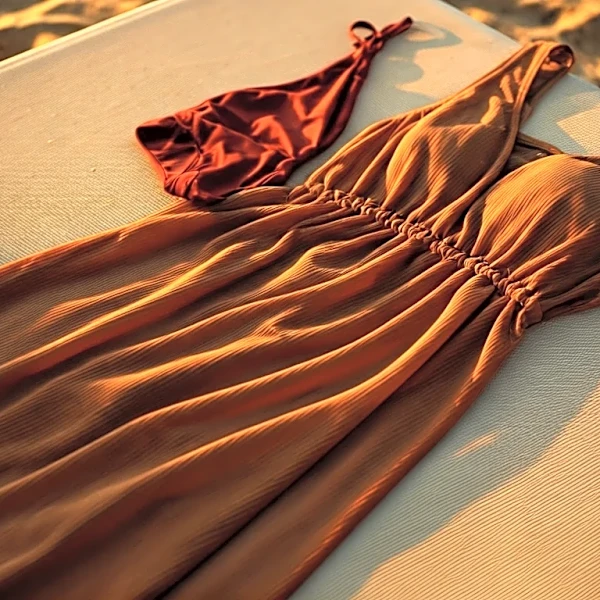



The Golden Rule: Frame, Don't Just Cover
The single most important rule for styling sheer resortwear is this: Treat the sheer piece as a frame for what's underneath, not just a cover-up. This simple mental shift is transformative. Instead of thinking of your caftan or sarong as something to
obscure your swimsuit, think of it as an accessory that enhances and showcases it. The goal is intentionality. When your sheer layer looks like a deliberate partner to your swimsuit, the entire outfit reads as chic and put-together. When it looks like an afterthought you threw on to hide, it can feel insecure. The 'rule' is to make the relationship between the two layers purposeful. Your swimsuit isn't something to be concealed; it's the foundation of the look that the sheer element is highlighting.
Mastering the Underlayer
Since your underlayer is the star, it deserves careful consideration. This is where you can truly define your look. For a sophisticated, monochromatic aesthetic, match the color of your swimsuit to your sheer cover-up—a black bikini under a black chiffon pareo, for example, creates a long, elegant line. For a bolder, more playful vibe, use contrast. A vibrant, printed swimsuit pops beautifully under a simple white linen shirt or a neutral-toned mesh dress. Don't be afraid to invest in a 'statement swimsuit' with interesting cutouts, hardware, or a unique one-shoulder design; this is its moment to shine. For those seeking more coverage than a bikini provides, a sleek one-piece, a stylish bodysuit, or even a set of high-waisted briefs and a matching bralette in a quality fabric can serve as a sophisticated and comfortable base layer.
Balancing Silhouette and Opacity
Great styling is all about balance, and that's especially true with sheer fabrics. Pay attention to the interplay between volume and fit. If you're wearing a voluminous, billowy organza caftan, the piece underneath should be sleek and form-fitting to avoid overwhelming your frame. Conversely, if your sheer layer is something more structured, like a crochet dress that hugs your curves, you have more freedom with the silhouette of your swimsuit underneath. The level of transparency also matters. A highly transparent chiffon requires a more 'finished' underlayer, as every detail will be visible. A semi-opaque piece, like a knit cover-up or a loosely woven sarong, is more forgiving and allows for a softer focus, blurring the lines for an effect that’s alluring without being overly revealing. The key is to create a dynamic contrast between the layers that feels visually satisfying.
From Poolside to Dinner Drinks
This rule of intentional layering isn't just for the beach. It’s the secret to making resortwear versatile enough for the entire vacation. That sheer, button-down tunic you wore over your bikini can be repurposed for the evening. Tie it at the waist over a simple slip dress, or wear it open like a jacket over a camisole and a pair of tailored linen trousers. A long, sheer skirt that worked as a poolside cover-up can be layered over a short satin slip or a sleek bodysuit for a dramatic dinner look. By focusing on the quality and style of both the sheer piece and what's beneath it, you build a mini-capsule wardrobe. The cover-up is no longer a single-use item but a key player that adapts to different settings, proving that thoughtful coverage is the ultimate form of vacation style.