

A Bass Player in His Thumb
The foundation of Pass's solo style was his revolutionary ability to play the role of both guitarist and bassist simultaneously. While most players were content to either strum chords or play melodies, Pass did both, adding a third layer: a walking bassline.
Using his thumb, he would lay down a steady, swinging bass part on the lower strings, outlining the chord changes with the fluid logic of a seasoned upright bassist. On top of this foundation, he used his other fingers to comp chords and play intricate melodies. This technique, known as chord melody, was not new, but Pass’s application was on another level. He treated the guitar not as a single voice, but as a polyphonic instrument, creating a rich, orchestral texture that was previously unheard of from a solo guitarist.
The Master of Counterpoint
Beyond just layering parts, Pass was a master of counterpoint—the art of weaving multiple independent melodic lines together. His improvisations often sound like a spirited discussion between several musicians. He wasn't just playing a melody over chords; he was creating moving inner voices that connected the harmony in surprising and beautiful ways. This piano-like approach to the fretboard set him apart. While many guitarists drew inspiration from horn players like Charlie Parker, Pass also looked to pianists like Art Tatum and Bud Powell, whose harmonic sophistication and multi-limbed independence he sought to emulate on six strings. This allowed him to create dense, yet clear, harmonic landscapes that were entirely his own.
Technique Born From Devotion
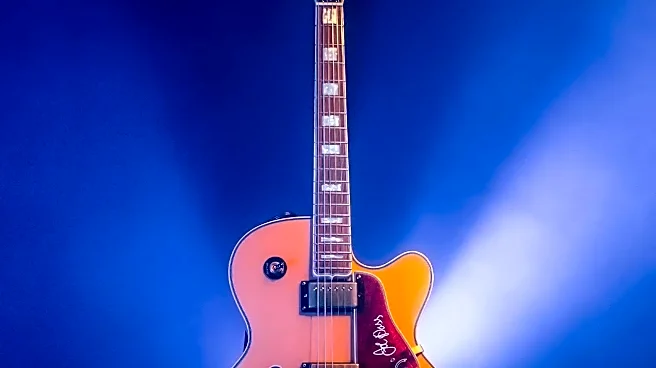
Pass's journey to virtuosity was not a straight line. His early career was derailed by years of drug addiction, a period he later described as a great waste of time. It was during a transformative stay at the Synanon drug rehabilitation center in the early 1960s that he rediscovered his purpose and dedication. Gifted a Gibson ES-175 guitar, an instrument that would become his signature, he began practicing with monastic focus for seven or more hours a day. This intense period of woodshedding is where he honed his concepts. He developed a highly personal fingerstyle technique, often forgoing a pick entirely for a warmer, more intimate tone on his solo recordings. His legato phrasing, full of smooth hammer-ons and pull-offs, was designed to mimic the fluid lines of a saxophone, creating a vocal-like quality in his playing.
An Improviser's Mind
What truly made Pass's sound impossible to perfectly replicate was that it wasn't based on pre-arranged pieces but on pure, real-time improvisation. While other chord-melody players might work out an arrangement, Pass created his multipart performances on the fly. His encyclopedic knowledge of chords, substitutions, and melodic patterns allowed him to react to the music in the moment with astonishing creativity. The landmark 1973 album "Virtuoso" showcased this perfectly: just Pass and his guitar, reinterpreting standards with a level of harmonic and melodic invention that stunned the jazz world. It cemented his legacy as not just a great technician, but one of the most brilliant improvisational minds the instrument has ever known.