
The Art of the Game Manager
Every sport has its superstars—the high-flyers, the prolific goal-scorers, the athletes whose highlight reels seem endless. But there’s another, rarer archetype: the game manager. This is the player who controls
the tempo, who sees the entire field of play like a chessboard, and who elevates their entire team through intelligence and poise rather than raw athleticism. They are the coach on the field, the steady hand on the tiller in the storm of high-stakes competition. A basketball point guard directing the offense shares a common DNA with a central midfielder who dictates the flow of a soccer match. They are masters of a subtle art, and few have embodied this better than U.S. soccer legend Claudio Reyna and NBA champion Chauncey Billups.
Claudio Reyna: The American Metronome
For over a decade, Claudio Reyna was the brain of the U.S. Men's National Team. Playing in the center of midfield, his game wasn’t about blistering pace or flashy tricks. Instead, his genius was in his tempo, his vision, and his almost supernatural calm under pressure. Reyna played the game as if he had an extra second on the ball, always picking the right pass to connect defense with attack. He was a metronome, setting the rhythm for his entire team. Whether in the German Bundesliga, the English Premier League, or on the World Cup stage, his style was consistent: control the ball, control the space, control the game. His leadership earned him the captain's armband for both club and country, a testament to how teammates responded to his steady, intelligent influence. His standout performance in the 2002 World Cup, where he was named to the tournament's Best XI, saw him guide the USMNT to the quarterfinals, showcasing his mastery on the world's biggest stage.
Chauncey Billups: Mr. Big Shot
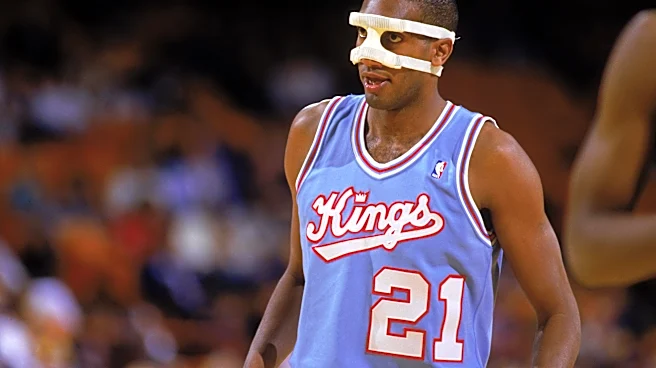
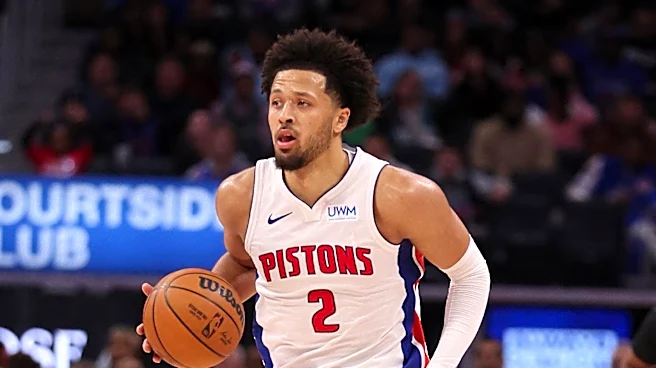
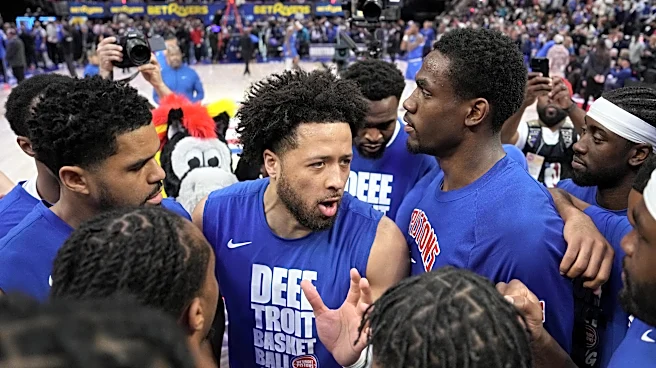
Chauncey Billups' career path was a study in perseverance. After being a high draft pick, he bounced between several teams before finding his home with the Detroit Pistons in 2002. It was there that he became the embodiment of a floor general. He wasn't the fastest or most athletic point guard in the league, but he was arguably the smartest. Billups led a blue-collar Pistons team—a squad without a single megastar—to the 2004 NBA Championship, earning Finals MVP honors in a stunning upset over the star-studded Los Angeles Lakers. His nickname, "Mr. Big Shot," wasn’t just for his ability to hit clutch shots in the final moments; it was for his unerring instinct for making the right play at the right time, whether a crucial pass, a defensive stop, or a game-winning basket. He was the ultimate leader, a player whose poise and high basketball IQ made everyone around him better.
A Shared Blueprint for Control
Though they played on different surfaces, Reyna and Billups operated from the same blueprint. Reyna's ability to deliver a perfectly weighted pass through a crowded midfield is the soccer equivalent of Billups threading a bounce pass through traffic for an easy layup. Both players understood that controlling the pace is paramount. They knew when to slow things down, absorbing pressure and calming their teammates, and when to inject a sense of urgency to exploit a weakness. Their value was never fully captured by statistics alone. It was in the way they organized their teams, the confidence they instilled, and their knack for being the anchor in moments of chaos. They led not by shouting, but by example and execution, proving that in the heat of competition, the calmest mind in the arena is often the most dangerous weapon.