



An Irresistible Hollywood Fantasy
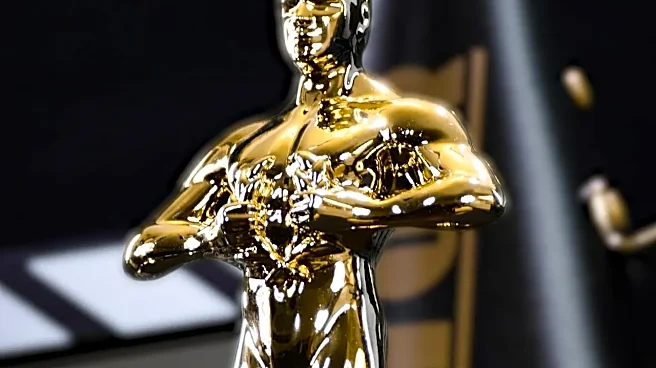
To understand Jean Dujardin's Oscar win, you have to understand the film he won for. The Artist was a black-and-white silent movie about a dashing 1920s movie star whose career tanks with the arrival of sound. For the Academy, a group that venerates Hollywood
history, it was pure catnip. The film was a love letter to the very industry that was voting on it. Dujardin’s character, George Valentin, was the perfect vessel for this nostalgia. He wasn't a challenging, complicated anti-hero; he was a throwback to the era of Douglas Fairbanks and Gene Kelly, complete with a dazzling smile and an adorable dog. In a field that included George Clooney and Brad Pitt, Dujardin was the romantic underdog, the star of a high-concept art film that nobody thought would be a commercial hit. It was a narrative almost too good to be true, and Oscar voters rarely resist a great story.
A Culture Clash on the Campaign Trail
As The Artist's Oscar campaign gained momentum, a minor scandal erupted that highlighted the cultural gap Dujardin had to bridge. In his native France, provocative posters for his upcoming comedy, Les Infidèles (The Players), appeared. One showed Dujardin holding a woman's legs upside down with the tagline, “I'm going into a meeting.” Another featured his co-star, Gilles Lellouche, in an equally suggestive pose. The French advertising authority, responding to complaints about the ads being sexist, had them pulled. The French media worried this very European, post-Dominique Strauss-Kahn-era controversy could be seen as offensive by American voters and derail his chances. While the uproar was minimal in the U.S., it was a brief glimpse into the subtle politics of perception. Dujardin's team had to manage an image of him as a classic, charming gentleman, not the star of a risqué French sex comedy—a political balancing act of pleasing two different cultures at once.
The Politics of Timing
The 2012 Oscars didn't happen in a vacuum. America was still climbing out of a recession, and the cultural mood was anxious. The Artist offered a potent form of escapism: a warm, funny, and visually stunning film that asked for nothing more than the audience’s delight. At a time of deep political division, it was something everyone could agree on. Dujardin, as the face of the film, was the perfect ambassador. He was foreign, but not in a way that felt threatening or alien. His acceptance speeches were effusive and heartfelt, exclaiming, “I love your country!” when he won. Unlike other foreign actors who might have brought a more critical or complex European perspective, Dujardin was pure, uncomplicated joy. He was a political blank slate onto which the industry could project its desire for unity and nostalgia. In that specific moment, he was exactly the winner Hollywood needed.
The Snub That Came After
The biggest “snub” in Jean Dujardin's story isn’t a nomination he missed; it’s what happened after he won. Following his Oscar, he had small roles in major films like The Wolf of Wall Street and The Monuments Men, but the expected launch into Hollywood superstardom never materialized. This wasn't an accident; it was a political reality of the industry. Dujardin himself noted that the American scripts he received weren't very interesting and that he wasn't willing to play the part of a full-time star required by the Hollywood “machine.” The very qualities that made him a novelty—his Frenchness, his limited English—also made him a risk for studios looking for a bankable leading man. Unlike actresses like Marion Cotillard, whose “beauty gives her the ability to represent France,” Dujardin found fewer archetypal roles available. The system that celebrated him for one magical night ultimately had no long-term place for him, a common fate for foreign actors who don't fit neatly into Hollywood's boxes. He was an award-worthy sensation but not a sustainable product.