





The Context is Everything
Think of the 123rd minute of the 2022 FIFA World Cup Final. Argentina and France are locked at 3-3. A long ball finds Randal Kolo Muani, who is suddenly one-on-one with Argentine goalkeeper Emiliano Martínez. The stadium holds its breath; the world holds its breath.
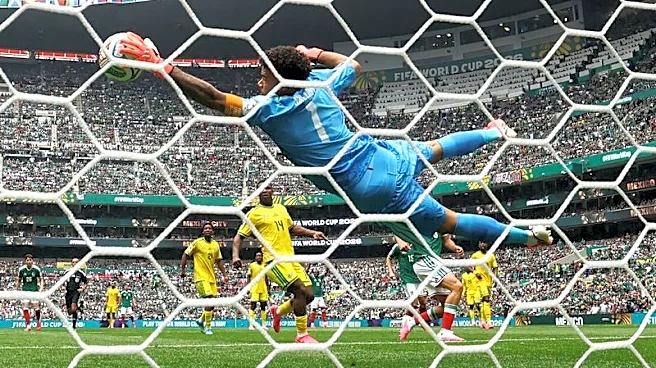
A goal here ends it. Kolo Muani strikes it hard and low. Martínez, instead of collapsing, makes himself enormous, spreading his body like a starfish and deflecting the rocket of a shot with his outstretched left leg. It wasn't just a save; it was the save that kept the World Cup dream alive. Had it happened in the first half or in a group stage match, it would have been a great stop. Happening in the final seconds of extra time in the biggest game on the planet, it became immortal. The stakes—the score, the minute, the tournament—are the primary ingredient that transforms a great save into a legendary one.
The Anatomy of Impossibility
Sometimes, a save is remembered because it seems to defy the laws of physics. The gold standard for this is Gordon Banks against Pelé in the 1970 World Cup. Jairzinho fired in a perfect cross, and Pelé, the greatest player in the world, rose to meet it with a powerful downward header aimed perfectly inside the post. Banks, scrambling across his goal line, had to change direction, dive low, and somehow get his fingertips to the ball, flicking it up and over the crossbar. Pelé was already yelling "Goal!" before he realized what happened. Banks later said he thought the ball had gone in. It’s remembered as the “Save of the Century” because it was technically perfect against the perfect player in a perfect moment. It didn’t win England the game (Brazil won 1-0), but its sheer athletic brilliance made it a career-defining moment for Banks and a permanent fixture in soccer's highlight reel.
The Narrative Pivot
A career-defining save must be a turning point. It can’t just delay the inevitable; it must change the story's ending. In the 2010 World Cup Final, Spain and the Netherlands were scoreless when Arjen Robben broke free. Just like Kolo Muani twelve years later, he was clean through on goal. Spanish goalkeeper Iker Casillas gambled, staying on his feet long enough to force Robben to commit. As Robben shot, Casillas desperately stuck out his right foot, diverting the ball just wide of the post. It was an awkward, almost clumsy-looking save born of pure instinct. But its effect was monumental. Spain, a team that had never won the World Cup, held on. Later in extra time, Andrés Iniesta would score the winning goal. Casillas's save didn't just prevent a goal; it preserved the destiny of an entire golden generation of Spanish football. The save became the pivot upon which the whole narrative of the tournament turned.
The Miracle of the Moment
And then there are the saves that are pure, unadulterated chaos—the moments that feel less like sport and more like divine intervention. Enter Jerzy Dudek in the 2005 Champions League Final. His Liverpool team had miraculously clawed back from 3-0 down against a stacked AC Milan side to force extra time. With minutes to go, superstar striker Andriy Shevchenko headed the ball from six yards out. Dudek blocked it. The ball rebounded straight back to Shevchenko, who was now only three yards away. He smashed the rebound towards the roof of the net, a certain goal. Inexplicably, Dudek’s flailing arm shot up and blocked the shot, sending it over the bar. No one, least of all Dudek or Shevchenko, could believe it. That double save broke Milan’s spirit. Liverpool went on to win the penalty shootout, with Dudek playing the hero once again. It wasn’t elegant, but it was the moment that secured the “Miracle of Istanbul” and defined Dudek’s career.