


The Gravity of the Main Stage
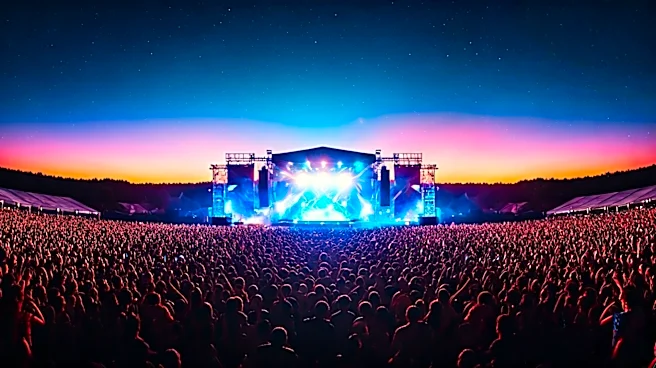
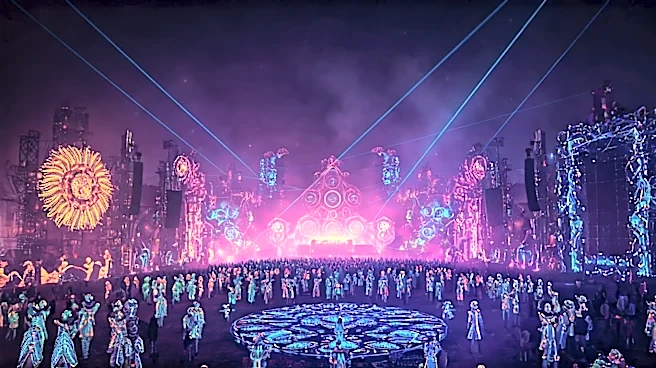
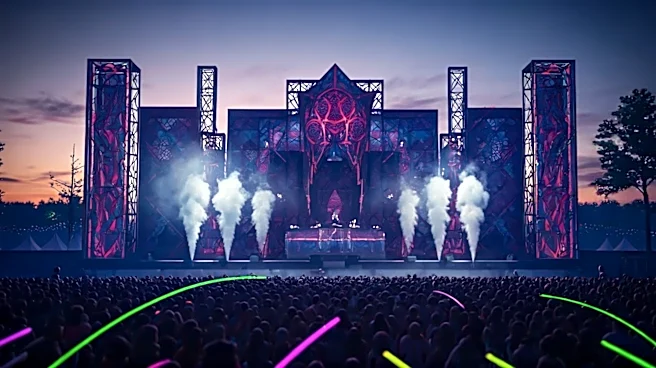
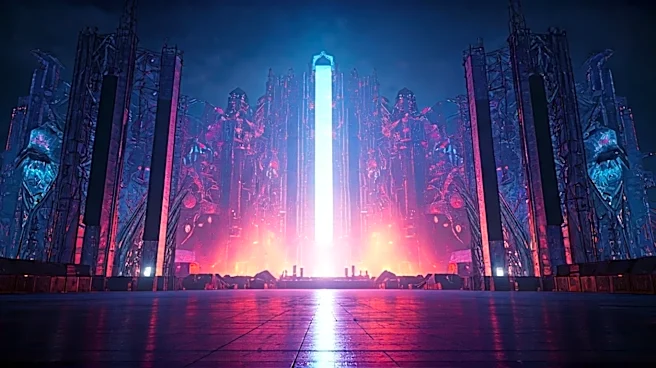
Let’s be clear: the main stages are magnificent. Standing in a sea of 80,000 people at kineticFIELD as lasers slice through the desert night and a world-famous DJ drops a globally recognized anthem is a core part of the EDC experience. It’s the spectacle
you see on the livestreams, the postcard moment that sells the tickets. Stages like kineticFIELD, cosmicMEADOW, and circuitGROUNDS are the festival’s anchors. They host the headliners with the broadest appeal, delivering a reliable, high-energy dose of pyrotechnics, confetti, and certified bangers. They are the common ground where everyone, from the first-timer to the seasoned veteran, can unite under a shared sky of fireworks. For many, this is EDC. But to believe the festival ends there is to read only the cover of a very thick book.
Where Genres Go to Thrive
The true importance of the second-tier stages—the neonGARDENs, quantumVALLEYs, and wasteLANDs of the festival—is their role as cultural incubators. While the main stages traffic in the universally popular, these smaller spaces are genre-specific sanctuaries. quantumVALLEY is a paradise for trance purists, a place for soaring melodies and emotional builds that might feel out of place between a bass-heavy festival trap set and a pop-EDM hit. neonGARDEN, often tucked away in a darker, more intimate corner, dives deep into the hypnotic grooves of house and techno, attracting a crowd that wants to dance for hours, not just jump for the drop. And then there's wasteLAND, an unapologetically ferocious outpost dedicated to hardstyle and other high-BPM genres. These stages aren't just an alternative; they are a vital service. They provide a platform for artists who are masters of their craft but not necessarily household names, ensuring that the incredible diversity of electronic music is represented. This is where you don't just hear music; you discover it.
From Crowd to Community
There’s a fundamental difference between a crowd and a community, and the second-tier stages make that distinction clear. On the main field, you are part of a massive, anonymous audience, united by the spectacle. At a smaller stage, you are among your people. The very act of choosing to be at, say, the bassPOD instead of watching the night’s closing headliner is a statement of identity. You are surrounded by fans who share your specific passion, who know the deep cuts, and who appreciate the nuances of the sound. The energy is different. It’s less about passive observation and more about active participation. The smaller footprint fosters a unique intimacy. You can see the DJ’s expression, you have room to actually dance, and you’re more likely to strike up a conversation with the person next to you who is losing their mind to the same obscure track. This is where friendships are forged and where the feeling of belonging, so central to rave culture, truly crystallizes.
A Necessary Palate Cleanser
Experientially, the smaller stages also serve a crucial function as a sensory reset. The relentless maximalism of the main stages can be exhausting. After an hour of non-stop fireworks, CO2 cannons, and stadium-sized drops, the senses can become numb. Ducking into a smaller stage is like cleansing your palate. The production might be simpler, but it’s often more focused and artful. The sound is tailored to the space, not broadcast across a speedway. It allows you to recalibrate your ears and your energy. It’s a change of pace that makes the entire festival more sustainable over a long three-day weekend. Moving between the overwhelming scale of circuitGROUNDS and the focused intensity of a Banyan Art Car set isn’t a downgrade; it’s how you experience the full dynamic range of what EDC has to offer. It makes you appreciate both the epic and the intimate.