




The Heartbreak of a CD Case
Arguably the most gut-wrenching use of music in a modern holiday film comes from 'Love Actually'. For much of the movie, Karen (Emma Thompson) suspects her husband Harry (Alan Rickman) is having an affair. Her fears are confirmed not with a dramatic confrontation,
but with a Christmas gift. Expecting a gold necklace she'd found in his pocket, she instead unwraps a Joni Mitchell CD. The gift is a cruel callback to an earlier conversation where Harry dismisses her love for the artist. In that moment, the CD isn't just a gift; it's a confession. As Karen retreats to her bedroom and plays the title track, 'Both Sides, Now', the song does all the work. Its lyrics about the illusions of love become her internal monologue, scoring her private moment of devastation as she realizes the necklace, and her husband's affection, were meant for someone else. The music isn't just accompanying her sadness—it’s explaining the entire history of her character's emotional life and the precise moment her world breaks.
An Accidental, Plot-Driving Duet
In 'Elf', music serves a different narrative purpose: it's a bridge between two characters. When Buddy the Elf (Will Ferrell) first meets the cynical Jovie (Zooey Deschanel), she wants nothing to do with his relentless Christmas spirit. The turning point isn't a grand speech, but a quiet moment in a department store locker room. Buddy overhears Jovie singing 'Baby, It's Cold Outside' in the shower and, in his typical guileless fashion, joins in. This scene, which was reportedly added to the script specifically for Deschanel's singing talents, is the first time Jovie's guard comes down. The song itself becomes the plot device that reveals her hidden vulnerability and passion, something Buddy’s earnest nature can finally connect with. It’s not just a cute duet; it’s the catalyst for their entire relationship, proving to Buddy (and the audience) that there's more to Jovie than her sarcastic exterior.
When the Songs Are the Story
Then there are films where the soundtrack isn't just a device, it’s the entire narrative architecture. In Tim Burton's 'The Nightmare Before Christmas', the story was built from Danny Elfman's songs before a full screenplay even existed. Each musical number functions as a chapter. 'Jack's Lament' establishes our hero's existential boredom with Halloween Town. 'What's This?' is a burst of manic discovery, using a complete shift in musical style to convey the wonder and confusion of stumbling into Christmas Town for the first time. Later, 'Making Christmas' uses dark, comical lyrics to show the Halloween Town residents fundamentally misunderstanding the holiday they're trying to co-opt. The songs don't just comment on the plot; they are the plot, with the lyrics and melodies doing the heavy lifting of character development, world-building, and storytelling from start to finish.
Scoring a Child's Point of View
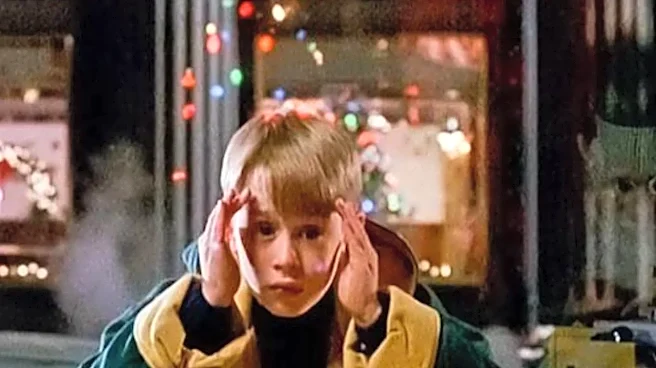
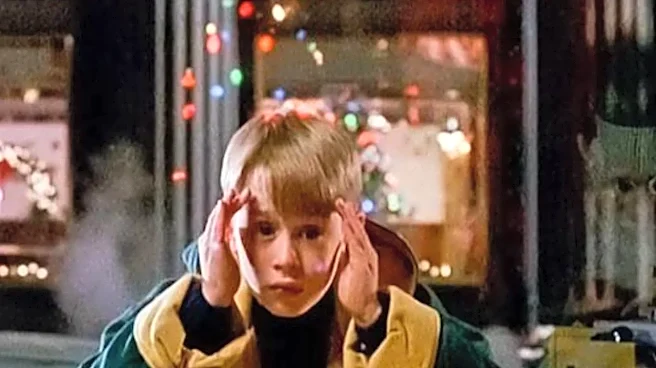
Sometimes, the pivot is more subtle, using an original score to define the film's emotional landscape. In 'Home Alone', John Williams' score is as essential as the booby traps. The main theme, 'Somewhere in My Memory', isn't just a pleasant carol; it's the sound of Kevin McCallister's loneliness and his deep-down yearning for his family. The theme appears in different forms throughout the film, underlining his emotional journey. Williams also uses music to create characters and build tension. The burglars are given a sneaky, villainous motif, while the mysterious Old Man Marley is initially scored with the ominous 'Dies Irae' melody, making him seem terrifying from a child’s perspective. When Kevin finally speaks with him in the church, the score shifts to the hopeful 'Carol of the Bells', signaling to the audience that our perception of Marley, like Kevin's, was wrong. The score effectively tells us who to fear and who to trust, guiding the audience entirely through music.