





The Battle Before the Ball
Long before the ball begins its arc, the real fight has already started. This is a game of movement and misdirection. Attacking players don't just run to where the ball is going; they run to where the space will be. They use decoy runs to pull key defenders
away from the target zone, clearing a path for the designated attacker. Teams employ “blockers” or “screeners,” players whose job isn't to win the header themselves, but to legally impede a defender, preventing them from tracking their assigned player. An attacker might start deep and run toward the ball, gaining momentum against a flat-footed defender. It’s a chess match of feints and surges, all designed to give the attacking player a precious half-step of separation, which is often all that’s needed.
Owning Your Space
Once players arrive in the target area, the physical contest begins. This is where the so-called 'dark arts' come into play. It's a fight for position that's as much about strength and leverage as it is about height. A shorter, smarter player can often beat a taller opponent by mastering this phase. The key is to establish a strong base, get low, and use your body as a shield. Winning the duel often means preventing the opponent from jumping effectively. This involves subtle but firm use of the arms and body to create a barrier and unbalance the other player. Referees watch for outright pushes and pulls, but experienced players know how to operate on the edge of the rules, using their frame to box out an opponent just as a basketball player fights for a rebound. The goal is to control the ground first, in order to own the air.
The Science of the Leap
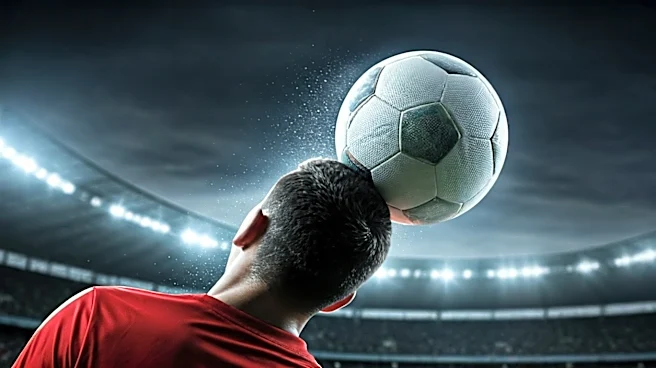
Winning a header isn't just about jumping high; it’s about jumping right. The biomechanics are critical. A player's ability to generate power is determined by their 'effective body mass'—a combination of their size, strength, and technique. A perfectly timed jump, using the whole body from the core and legs, turns the player into a solid, unified projectile. Good technique involves keeping your eyes open and on the ball at all times, with neck muscles tensed to meet the impact. Contact should be made with the forehead, the hardest part of the skull, to direct the ball with power and accuracy. Timing is everything. Jumping too early means you’re already on your way down when the ball arrives. Jumping too late means you’ll never reach it. The masters of the air seem to hang for a moment, an illusion created by perfect timing and body control.
Attacking Choreography
While individuals fight their own battles, they are all part of a larger attacking scheme. The type of delivery from the set-piece taker dictates the movement. An inswinging corner curves toward the goal, making it difficult for the goalkeeper and inviting attackers to get any touch on it. An outswinging corner moves away from the goal, which can pull defenders out of position and set up a cleaner, more powerful header for an attacker running onto the ball. Some of the most effective strategies involve overloading a specific zone. By sending multiple runners to the near post, for example, an offense can create confusion or hope for a flick-on to a secondary runner at the back post. Short corners are another tactic, designed to change the angle of attack and turn a set piece into an open-play crossing opportunity.
The Defensive Counter
For every attacking trick, there is a defensive countermeasure. Coaches generally choose between three main systems. In man-marking, each defender is assigned a specific attacker to follow. The advantage is clear accountability, but a clever attacking team can exploit this by using blockers and decoy runs to create mismatches. In zonal marking, defenders are responsible for a specific area of the box and are tasked with attacking any ball that enters their zone. This covers dangerous spaces effectively, but can be vulnerable to attackers who time their runs with momentum into those zones. Most modern teams now use a hybrid system, combining the two: several players mark zones in the most dangerous central areas, while others man-mark the opponent's biggest aerial threats. Communication between defenders and the goalkeeper is paramount to adjusting on the fly and ensuring that every attacker is accounted for.