






A Quick Soccer Crash Course
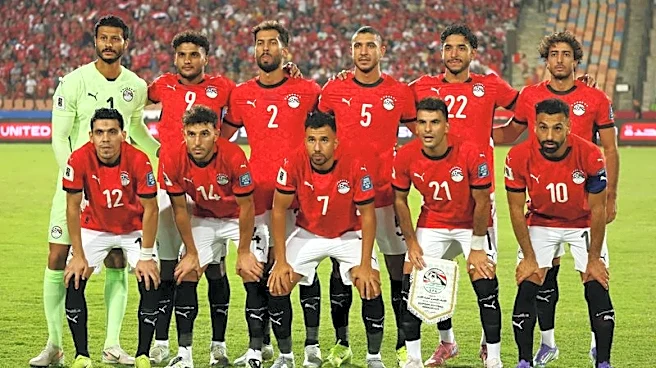
Before we translate, let's establish the basics. In global football (soccer), 4-3-3 is one of the most popular and aggressive formations on the planet. The numbers represent players by position, starting from the back: four defenders, three midfielders,
and three forwards. Unlike more defensive setups, a team playing a 4-3-3 is making a clear statement: we are here to attack. It prioritizes offensive firepower, width, and pressing the opponent high up the field. The three forwards are the heart of the system, designed to overwhelm the other team’s back line with speed, skill, and sheer numbers. The three midfielders behind them are the engine room, tasked with both controlling the game's tempo and supporting the attack. It's a high-risk, high-reward system that, when it works, produces thrilling, goal-heavy games. Think of teams like Pep Guardiola's Barcelona or Jürgen Klopp's Liverpool—they lived and died by this attacking philosophy.
Translating Philosophy, Not Numbers
Okay, back to the NFL. The key to understanding what 4-3-3 means in an American football context is to stop thinking about a direct numerical translation. There is no formation with four offensive linemen, three running backs, and three tight ends that defines a modern offense. Instead, you have to translate the *philosophy*. A 4-3-3 in soccer is about prioritizing offensive weapons, spreading out the defense, and creating favorable one-on-one matchups. Sound familiar? It should. It’s the driving principle behind the modern NFL spread offense. When a team dedicates itself to an aggressive, pass-heavy attack that forces the defense to cover every blade of grass, they are speaking the same philosophical language as a 4-3-3 soccer team. It’s about dictating the terms of engagement by putting as much speed and skill on the field as possible.
Meet the NFL's '11 Personnel'
So, what’s the concrete NFL equivalent? It’s “11 personnel.” This is the most common personnel grouping in today’s league, and it’s the gridiron’s spiritual sibling to the 4-3-3. “11 personnel” means one running back, one tight end, and three wide receivers are on the field. Those three receivers are the NFL’s version of the three forwards. They are there to stretch the defense vertically and horizontally, creating space and exploiting matchups. Just as a 4-3-3 puts pressure on defenders to handle tricky forwards, the 11 personnel forces a defense to put more defensive backs (nickels and dimes) on the field, often replacing bigger, slower linebackers. This creates a numbers game. If the offense can successfully run the ball against that lighter defensive look, they have a massive advantage. If the defense stays in its base formation, they risk a speedy receiver burning a linebacker for a huge gain. This is the strategic chess match at the heart of the modern NFL, and it all starts with an offensive philosophy built on skill players—just like the 4-3-3.
The Defensive Side You Already Know
Of course, the number combination “4-3” is already deeply ingrained in the NFL lexicon. The 4-3 defense (four defensive linemen, three linebackers) has been a staple of the league for decades. It’s a balanced, versatile front designed to stop the run with its big men up front while providing enough coverage flexibility with its linebackers. But seeing it in this new light highlights the difference in language between the sports. In the NFL, the numbers almost always refer to the front seven on defense (e.g., 4-3, 3-4). In soccer, the numbers describe the entire outfield team from back to front. The fact that a 4-3 is a defensive bedrock in one sport while a 4-3-3 is an attacking statement in another is the perfect illustration of their different strategic worlds.