









The Slow-Burn 'Disclosure Day'
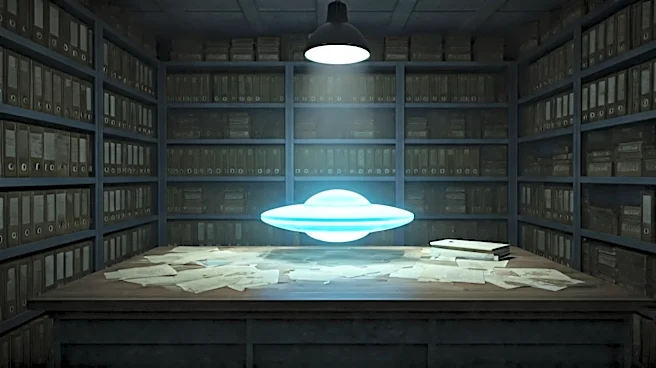
First, let's get one thing straight: "Disclosure Day" won't be like the movies. There will be no single press conference where a somber president confirms we're not alone. Instead, it's a slow, bureaucratic process driven by legislation like the UAP Disclosure Act,
championed by a bipartisan group of senators including Chuck Schumer. The goal isn't a dramatic reveal, but the systematic declassification of government records related to Unidentified Anomalous Phenomena. Think of it less as a blockbuster premiere and more as a season-long TV show, with information released in cryptic, episode-like drops. This drip-feed of information—documents with heavy redactions, reports that raise more questions than answers—is the perfect fuel for public speculation. The very act of hiding information in black marker ink creates a vacuum that the human imagination rushes to fill.
Casting the Main Characters
Every good myth needs its heroes and prophets. In this new UAP narrative, the characters aren't bug-eyed aliens but decorated military officials and powerful politicians. The central figure is David Grusch, a former intelligence official who became the ultimate whistleblower. His testimony before Congress in July 2023, delivered with the calm precision of a career officer, was electrifying. He spoke of a decades-long cover-up, retrieved craft of "non-human origin," and "biologics" collected from crash sites. He’s the reluctant hero, the insider who knows the truth. Then you have senators like Marco Rubio and Kirsten Gillibrand, once-unlikely champions of the UAP cause, who now lend establishment credibility to the inquiry. They are the seasoned mentors guiding the hero through a labyrinth of government secrecy. These aren't wild-eyed conspiracy theorists; they are the architects of the very process, which makes their involvement all the more compelling.
The Modern Myth-Making Machine
This isn't your grandfather's Area 51 story. The old UFO myths were born from grainy footage and campfire stories, spreading slowly through newsletters and conventions. Today's mythology is being forged in real time, amplified by the internet's hyper-speed content machine. Every declassified document, every cryptic quote from a hearing, is instantly clipped, analyzed, and remixed on TikTok, YouTube, and X (formerly Twitter). The language used in hearings—intentionally precise and non-committal—becomes raw material for interpretation. Grusch’s term “non-human biologics” is a perfect example. It's technically dry but culturally explosive, allowing for a hundred different theories to bloom. The government is trying to control the narrative through a careful, legalistic process, but in doing so, it’s inadvertently creating the most potent source material for modern folklore we’ve seen in a generation. The gaps in the official story are where the real story, the pop culture myth, takes root.
From Capitol Hill to Hollywood
The long-term cultural impact is inevitable. The Congressional UAP saga is a ready-made screenplay. It has everything: high stakes (the nature of reality), a secret-hoarding antagonist (a shadowy cabal within the government), a brave whistleblower, and a mystery box of unknown technology. We are watching the origin story for the next wave of science fiction. Where *The X-Files* captured the paranoia of the 1990s, this new narrative is about institutional legitimacy and the struggle for transparency in the digital age. Don't be surprised when you see a prestige drama series about the UAP Disclosure Act or a blockbuster film inspired by Grusch's testimony. The government may have intended to create a historical record, but what it's really doing is building the foundation for a new pop mythology—one that will shape how we talk about our place in the universe for decades to come.