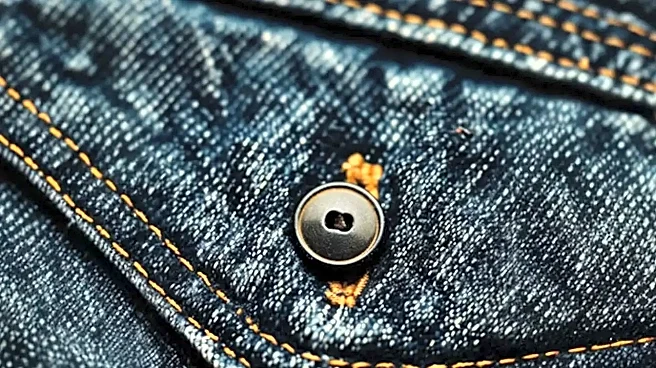





Look at the hem of a well-loved pair of jeans. You might see a beautiful, twisted fade along the edge, like a tiny rope. This isn't an accident or random wear; it's a detail born from a specific, old-school manufacturing process.
The Two Stitches That Define Your Denim
Most clothing today is
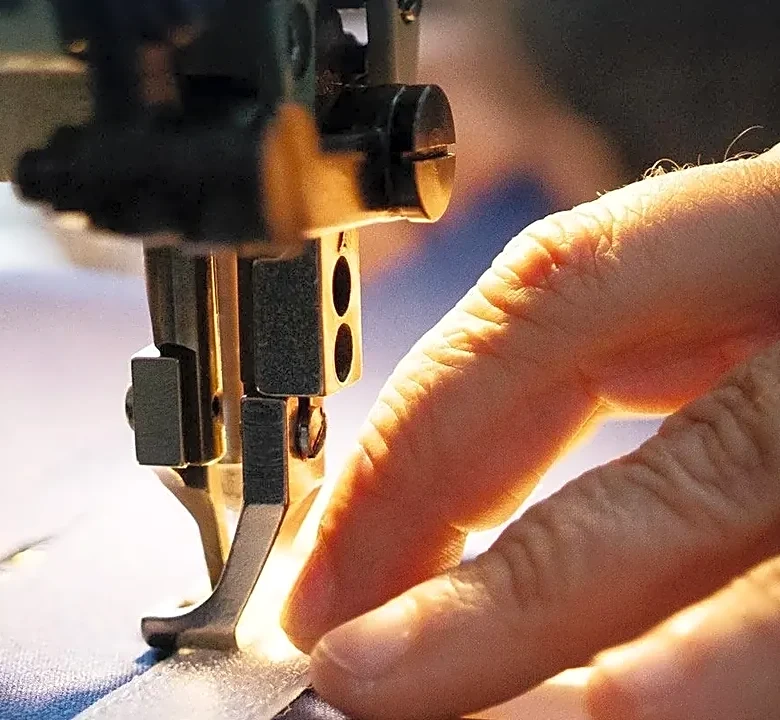
sewn with a lockstitch. It uses two threads—one from the needle and one from a bobbin below—that 'lock' together in the middle of the fabric. It’s strong, flat, and efficient, which is why it's everywhere. A chain stitch, however, is different. It’s formed with a single thread that loops around itself on the underside of the fabric, creating a pattern that looks like a chain. This method was common in mid-20th century American workwear. While a lockstitch creates a flat, stable seam, the chain stitch creates a bulkier, more flexible one that has a tendency to pucker and shrink unevenly over time—which is exactly what denim lovers are looking for.
Meet the Legend: The Union Special 43200G
The secret to the most coveted chain-stitched hems lies in a specific machine: the Union Special 43200G. First produced in 1939, this machine was the industry standard for hemming jeans for decades before being discontinued in 1989 as factories shifted to faster lockstitch machines. What makes the 43200G so special is technically a flaw. Its feeding mechanism pulls the top and bottom layers of the thick, folded denim hem at slightly different rates. This slight misalignment, combined with the way the machine operates, is what sets the stage for a unique aging process. When Japanese manufacturers began meticulously recreating vintage American jeans in the 1980s, they hunted down and bought up these old Union Special machines to replicate the authentic details perfectly.
The Science of the 'Roping' Effect
So, how does this all lead to that twisted fade? It’s a combination of three factors: the chain stitch, the machine's 'flaw', and the nature of denim itself. The uneven feeding of the Union Special machine causes the thick, folded fabric of the hem to twist ever so slightly as it's sewn. This creates a seam that isn't perfectly flat but has a subtle, rope-like texture. When the jeans are worn and, most importantly, washed, the denim and the cotton thread shrink. The inherent tension and bulk of the chain stitch, combined with the built-in twist from the sewing process, cause the hem to pucker and tighten into a more pronounced spiral. The high points of this 'rope' then rub against surfaces and fade faster, while the lower points remain dark, creating a beautiful, high-contrast pattern.
A Mark of Authenticity and Craft
In the world of premium and heritage denim, a chain-stitched hem is more than just a construction detail; it’s a badge of honor. It signals that a pair of jeans was made with an appreciation for vintage manufacturing techniques and the unique character that comes from them. While a lockstitch is arguably more durable and won't unravel if a thread breaks, it remains flat and produces an even, straight line of fading at the hem. The roping effect is impossible to achieve with a standard lockstitch. That's why denim enthusiasts will often seek out specialty tailors with vintage Union Special machines to hem their expensive raw or selvedge denim, ensuring the potential for that beautiful roping isn't lost. It’s a choice that prioritizes aesthetic and authenticity over pure, modern efficiency.