









The Search for a Worthy Conflict
Let’s be honest: *Toy Story 3* was a perfect ending. It was a beautiful, heartbreaking meditation on growing up, letting go, and the bittersweet transition from one stage of life to the next. Then *Toy Story 4*, against all odds, found a worthy epilogue
by asking an even more profound question: what does a toy do after its purpose is fulfilled? Woody’s decision to leave the gang and become a “lost toy” with Bo Peep felt like a final, definitive statement on his own identity. So, where do you go from there? Another evil toy at a daycare? A perilous cross-country road trip? The franchise has already exhausted the obvious external threats. For a fifth installment to justify its existence, the conflict can’t just be bigger; it must be fundamentally different. It needs to reflect a change not just in Andy's or Bonnie's room, but in childhood itself. The greatest threat to Woody and Buzz in 2024 isn't a shiny new space ranger—it's a world where kids don't need to imagine one.
The Real Villain: The End of Boredom
The secret engine of the entire *Toy Story* universe is a child's imagination, and the fuel for that engine has always been boredom. A rainy afternoon, a long car ride, a quiet hour in a bedroom—these are the moments when inanimate objects spring to life. Andy didn’t just play with Woody and Buzz; he created elaborate, galaxy-spanning narratives because he had the unstructured time to do so. His toys were co-conspirators in the act of creation. Now, imagine a child in the present day. That same rainy afternoon is filled with a tablet streaming endless content. The long car ride is pacified by a smartphone game. The quiet hour is consumed by algorithm-fed video clips, each designed to capture and hold attention for exactly 30 seconds. This isn't a judgment on parents; it's a reality of modern life. But in this world, boredom is a problem to be solved, a void to be filled instantly by a screen. For a toy, a creature whose entire existence depends on being picked up when there's 'nothing else to do,' this reality is an extinction-level event.
An Existential Crisis for the Digital Age
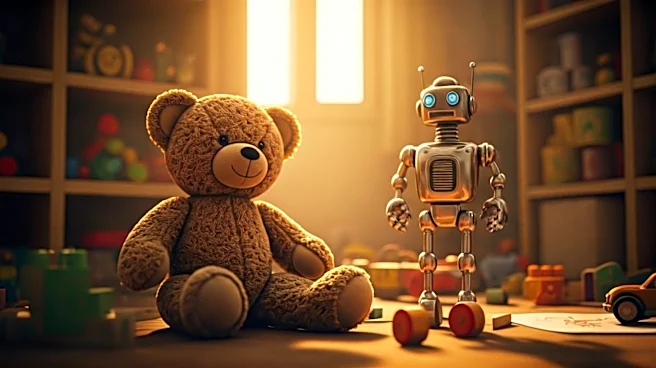
This sets up a brilliant, deeply resonant premise for *Toy Story 5*. The conflict is no longer about a toy’s fear of being replaced by a better toy. It's about the collective fear of being replaced by a fundamentally different mode of existence. Woody’s classic anxiety—"Am I still the favorite?"—evolves into a much more terrifying question: "Is there even a game to be played?" Picture it: Buzz, Woody, and the gang find themselves with a new owner who loves them, but only for a few minutes between curated activities and screen time. They lie dormant not because they're unloved, but because the very concept of imaginative, self-directed play is shrinking. Their new mission wouldn't be to get back in the toybox, but to somehow inspire their child to rediscover the magic of being bored. It would be a quiet, internal, and devastatingly poignant struggle. How do you compete with an infinite content library? How does a pull-string cowboy convince a child to look away from a screen that offers the whole world at a touch?
The Perfect Franchise for the Job
No other cultural property is as perfectly positioned to tackle this subject. Since 1995, *Toy Story* has been our primary mainstream text for thinking about the inner lives of the objects that define childhood. The franchise has aged with its audience, evolving from simple stories about friendship and jealousy to complex allegories about purpose, mortality, and obsolescence. By turning its lens on the disappearance of boredom, Pixar wouldn't just be making another sequel. It would be holding up a mirror to every parent and child in the audience. It could use these beloved characters, symbols of a pre-digital imaginative landscape, to gently and powerfully explore what we might be losing in our hyper-stimulated, always-on world. It would transform the series from a story about toys to a story about the very nature of play in the 21st century.