





It All Started With Jaws
You can’t talk about summer movies without talking about Jaws. When Steven Spielberg’s thriller hit theaters in June 1975, it didn’t just make audiences afraid to go in the water; it fundamentally invented the summer blockbuster. Before Jaws, summer was
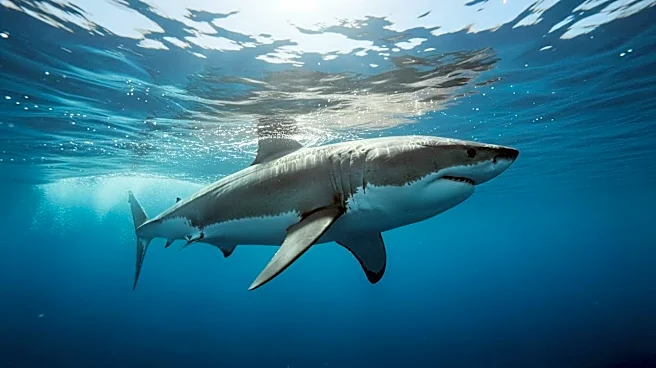
often a dumping ground for studios. But its massive success, becoming the highest-grossing film of all time until Star Wars, proved that a high-concept thriller released in the summer and backed by a major TV advertising campaign could be a cultural and financial phenomenon. It established a simple, terrifying, and endlessly repeatable formula: sun, sand, and a primal predator. Every shark movie that has followed swims in the wake of Spielberg's masterpiece.
Primal Fear Is a Universal Language
There’s a simple, psychological reason these films work: sharks are real-life monsters. Unlike aliens or ghosts, they actually exist, and they inhabit an environment where humans are clumsy, vulnerable, and not at the top of the food chain. This taps into a primal fear of being eaten that anyone, anywhere can understand. The concept of "person versus big shark" is incredibly easy to market and requires no cultural translation, making these films potent performers in the global box office. The fear is baked into our DNA, and Hollywood has learned how to exploit it for the price of a movie ticket.
The Perfect Mid-Budget Model
While you have behemoths like The Meg franchise, many of the most successful shark movies of the last decade have been lean, efficient thrillers. Films like The Shallows (2016) and 47 Meters Down (2017) were made for relatively modest budgets but delivered huge returns. The Shallows earned over $115 million on a $17 million budget, proving the model's profitability. The high-concept nature—a single location, a small cast, and one CGI creature—keeps costs down. The built-in suspense and clear stakes mean the movie practically sells itself, offering studios a lower-risk, high-reward investment compared to a $250 million superhero gamble.
An Endlessly Adaptable Monster
The genre has also proven remarkably flexible. It can be a tense, character-driven survival story like Blake Lively’s ordeal in The Shallows or a giant, over-the-top action spectacle like Jason Statham punching a prehistoric megalodon. In recent years, the premises have grown more absurd, from sharks in a hurricane-flooded town (Shiver, 2026) to those hunting plane crash survivors in a sunken fuselage (Deep Water, 2026). Some critics argue the genre is becoming oversaturated with trashy, low-quality entries, yet audiences keep tuning in. The absurdity itself has become part of the appeal, a knowing wink that promises schlocky, thrilling entertainment.
The Tradition Continues
The trend shows no sign of stopping. The summer of 2026 alone is slated to bring a new wave of aquatic horror. Deep Water, starring Aaron Eckhart, involves survivors of a plane crash battling sharks. Shiver unleashes sharks on a coastal town in the aftermath of a hurricane. Meanwhile, The Devil's Mouth, a streaming release, traps friends in an underwater cave system with a bull shark. The settings and scenarios change, but the core appeal remains the same. The summer movie calendar simply wouldn’t feel complete without the threat of a great white—or a megalodon, or a pack of bull sharks—to make us think twice before taking a dip.