


Hiding the Strings
The simplest reason monsters stick to the shadows is financial. Special effects are expensive, and bad special effects are distracting. Long before computer-generated imagery (CGI) became the norm, creatures were brought to life with animatronics, puppets,
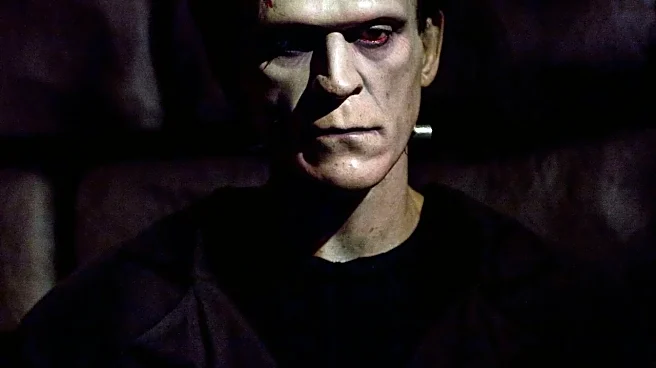
and intricate costumes—all of which are much more convincing when you can’t see them too clearly. A rubber suit looks like rubber under a spotlight, but in the gloom, it can become a terrifying beast. Darkness is the great equalizer, hiding the zippers, seams, and latex that might shatter the illusion. Micro-budget horror films, in particular, have mastered the art of atmospheric storytelling, relying on what you don't see to create scares. By keeping the monster obscured, filmmakers can save a fortune on effects without sacrificing scares; in fact, they often enhance them.
The 'Jaws' Rule
The artistic case for hiding the monster was made famous, almost by accident, during the production of Steven Spielberg’s 1975 classic, Jaws. The mechanical shark, nicknamed "Bruce," was notoriously unreliable and frequently malfunctioned. Forced to shoot around the problem, Spielberg ended up showing the shark far less than intended. Instead, he relied on John Williams’ iconic score, underwater point-of-view shots, and the sheer terror on the actors' faces to build suspense. The result was a masterclass in tension. Audiences spent two-thirds of the film imagining the creature, and their collective imagination conjured a beast far more horrifying than any prop. This happy accident became a guiding principle in horror, informally known as the "Jaws Rule": the less you show, the scarier it is. Ridley Scott famously applied the same logic in Alien (1979), offering only fleeting glimpses of the Xenomorph as it stalked the crew of the Nostromo.
Fear of the Unknown
This filmmaking trick works because it taps into a primal human fear: the unknown. Our brains are wired to fill in the blanks, and when we’re presented with a shadowy figure or a strange noise, our imagination tends to assume the worst. Darkness conceals, distorts, and manipulates what we see, forcing us to imagine what horrors might be lurking just out of frame. The monster we conjure in our own mind is custom-built from our personal fears, making it infinitely more terrifying than a monster conceived by a special effects artist. Filmmakers exploit this psychological loophole to build suspense and dread. The silence before a jump scare, the empty hallway, the rustle in the bushes—these moments are frightening because they let our own anxiety do the heavy lifting.
Has CGI Changed Anything?
Today, with advanced CGI, filmmakers can create any monster they can imagine and show it in crystal-clear detail. Yet, the tradition of hiding monsters in darkness persists. While some films embrace fully-rendered creature features, many of the most effective modern horror stories still understand the power of restraint. Found footage films like The Blair Witch Project became cultural phenomena by never showing the monster at all. Even in a CGI-heavy landscape, darkness serves a crucial role in setting the mood and building atmosphere. Directors still use backlighting to create ominous silhouettes and underexposure to heighten tension. The tools have changed, but the underlying principle remains the same. Whether it’s a practical puppet or a digital creation, a monster is often most powerful when it remains just on the edge of what we can see, proving that sometimes, what you leave in the dark is more important than what you bring to light.