


The Blueprint of Broken Walls
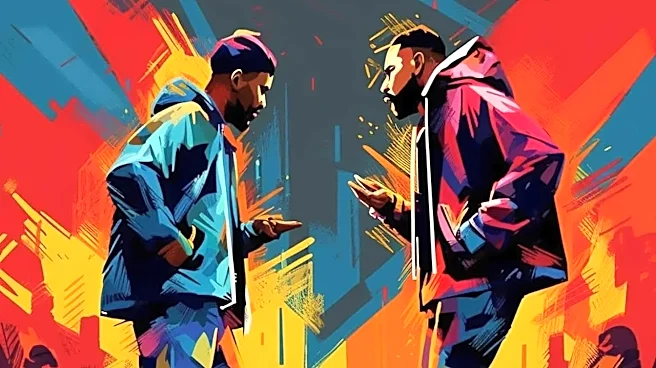
To understand why these pairings create such electricity, you have to go back to 1986. Hip-hop group Run-DMC was hesitant when producer Rick Rubin suggested they cover Aerosmith's 1975 hit, “Walk This Way.” At the time, rock radio and rap radio were different
planets. But the collaboration wasn’t just a cover; it was a collision. By bringing Steven Tyler and Joe Perry into the studio to re-record their parts, Rubin created a genuine fusion. The resulting track became a cultural shockwave, smashing into the Top 5 of the Billboard Hot 100—a first for a hip-hop song. The music video, which famously depicted the two bands literally breaking down a wall between them, became a perfect metaphor. It gave Aerosmith a massive career resurgence and, more importantly, kicked the door open for hip-hop to enter the mainstream, proving the two genres weren’t just compatible, but combustible in the best way.
An Arena-Sized Evolution
The “Walk This Way” experiment laid the groundwork for the '90s and 2000s, when the crossover became a full-fledged movement. Bands like Rage Against the Machine built their entire identity on the fusion of ferocious guitar riffs and rapped vocals. In 1991, thrash metal band Anthrax teamed up with Public Enemy for a blistering version of “Bring the Noise.” But the apex of this era was arguably the 2004 EP “Collision Course” by Jay-Z and Linkin Park. This wasn't a guest verse; it was a meticulously crafted mashup of two titans at the peak of their powers. Hearing Jay-Z’s rhymes from “Dirt Off Your Shoulder” seamlessly woven into the raw anguish of Linkin Park’s “Lying From You” felt both inevitable and revolutionary. The project showed that the shared DNA of rebellious energy and massive sound was more than just a novelty—it was a new art form.
The Festival's Unique Alchemy
While studio collaborations are one thing, the festival stage is where the chemistry truly ignites. The open-air environment acts as an amplifier for this fusion. Festivals draw diverse crowds, mixing die-hard rock fans with dedicated hip-hop heads, all sharing the same field. This creates a unique opportunity for what marketers call pattern interruption—a moment so unexpected it jolts you to attention. DMX’s legendary performance at Woodstock '99, where he held a crowd of over 200,000 in the palm of his hand, showed how a rapper could command a traditionally rock-oriented space with sheer force of will. These moments become festival folklore, the “you had to be there” stories that define the experience. The massive sound systems, designed for chest-thumping bass and soaring guitar solos, are perfectly suited to the sonic weight of both genres.
Today, Genre Is Just a Suggestion
In today’s musical landscape, the lines between rock and hip-hop have become almost entirely blurred. Artists like Post Malone have built careers on this fluidity, collaborating with rock royalty like Ozzy Osbourne on one track and delivering trap anthems on the next. Lil Uzi Vert has experimented heavily with rock sounds, even teaming up with band Bring Me The Horizon. Modern festival lineups, from Coachella to Lollapalooza, are intentionally curated to be genre-agnostic. The once “unlikely” collaboration is now an expected highlight. The fusion is no longer a surprise; it's a celebrated staple. This reflects a fundamental shift in how audiences consume music—in playlists and streams where the vibe matters more than the category. The crossover isn't just common; it's a testament to the fact that the two genres were always more alike than different, born from rebellion and built for loud expression.