









1. Anchor Everything to the Screen
Before a single guest arrives, your television is the star player. All tactical decisions flow from its position. First, eliminate glare. An hour before kickoff, check for light from windows or lamps reflecting off the screen and adjust blinds or furniture
accordingly. Next, consider height. The center of the screen should be roughly at eye level for a seated viewer. If it’s mounted high above a fireplace, you’ll want to encourage guests to lean back or sit further away to avoid neck strain. The optimal viewing distance is typically 1.5 to 2.5 times the diagonal screen size. For a 65-inch TV, that means your primary seating should be about 8 to 13 feet away. This main couch or sectional becomes the 'front-row' bench, the anchor of your entire viewing stadium.
2. Build Your Viewing Tiers
You can’t fit everyone on one couch, so think like a stadium architect and create tiers. This is the single most effective strategy for maximizing sightlines.
**The Field Level:** The floor is your best friend. Clear the coffee table (or move it to the side as a drink station) and lay down blankets, large floor pillows, poufs, or even beanbags. This is prime real estate for the die-hard fans who want to be as close to the action as possible. It’s comfortable, casual, and utilizes otherwise dead space.
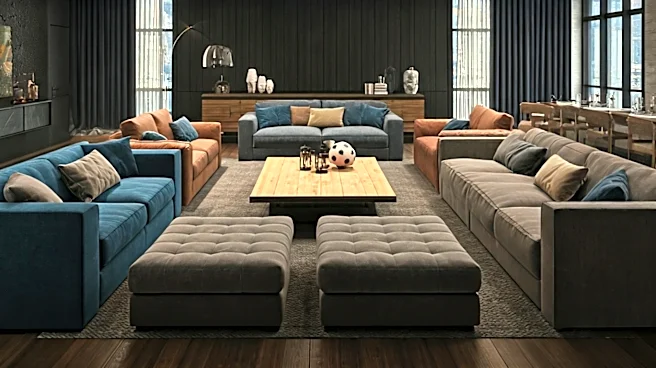
**The Mezzanine:** This is your primary furniture—the couches and armchairs. They form the second, elevated tier. This is where most of your guests will naturally gravitate.
**The Stadium Seats:** Look for height. Barstools from your kitchen can be lined up along a back wall or behind the main couch. Dining chairs can also be brought in to flank the main seating area. This creates a third, highest tier for latecomers or guests who prefer to sit upright. This layered approach ensures that people in the back aren't just staring at the heads of people in the front.
3. Designate Clear Zones
Not everyone watches a game the same way. A successful party setup accounts for different types of fans. Create two distinct zones to keep the peace and improve the experience for everyone.
**The Viewing Zone:** This is the area directly in front of the TV, encompassing your tiered seating. It’s the unofficial “no talking during a corner kick” area. Keep this space focused on the screen. The only furniture here should be for seating.
**The Social Hub:** This is where the food, drinks, and conversation happen. Designate a corner of the room, an adjacent dining area, or a kitchen island as the official hub. By centralizing the snacks and drinks away from the direct line of sight of the TV, you accomplish two things: you prevent people from constantly walking in front of the screen, and you give guests who are more interested in socializing a dedicated space to chat without disturbing the intense viewers. It’s a win-win.
4. Prioritize Traffic Flow
A crowded room becomes claustrophobic when there’s no clear path to move. After arranging your seating, walk through the space from the perspective of a guest. Is there a clear, unimpeded path from the entrance to the seating area? Can someone get from the couch to the Social Hub for a drink refill without making five people move? Most importantly, is the path to the bathroom obvious and unobstructed? You may need to push a couch an extra six inches away from a wall or angle an armchair to create a wider channel. A little bit of breathing room for foot traffic makes the entire space feel larger and more comfortable, especially during halftime rushes.
5. Use Every Piece of Furniture Creatively
When your roster of guests exceeds your dedicated seating, it's time for some creative substitutions. Don't be afraid to repurpose furniture from other rooms. A sturdy ottoman can be a seat for one or a shared bench for two kids. A bedroom bench can be moved into the living room and placed against a wall. If you have a wide, stable coffee table that was moved to the side, it can serve as a bench for a few people in a pinch (just be sure it’s sturdy!). Even piano benches or entryway stools can be drafted into service. The goal isn't to create a perfectly matched living room set, but to ensure every guest has a comfortable place to land for 90 minutes plus stoppage time.