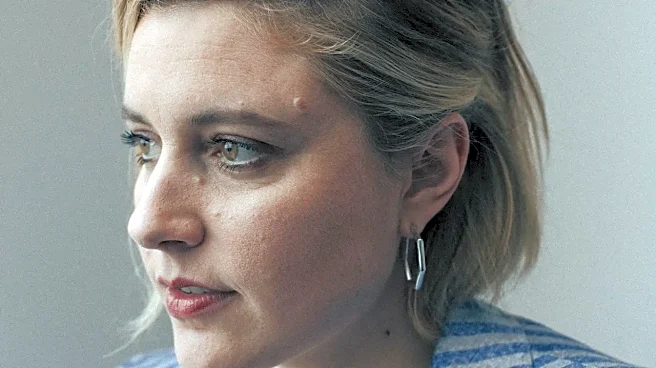






The news that Greta Gerwig, the poet of messy-girl humanity, will direct 'The Chronicles of Narnia' for Netflix feels like a beautiful, bizarre mismatch. But it’s not the magic or the talking lion that will define her version. It’s a single, small, human moment.
The Gerwig Signature
Before we step through the wardrobe, let’s talk about the Gerwig of it all. Her filmography is a masterclass in finding the epic in the everyday. Think of Saoirse Ronan’s Jo March pleading for women to have their own ambitions and minds in 'Little Women', but also admitting, 'I am so lonely'. Or the perfectly rendered mother-daughter friction in 'Lady Bird', where a thrift store trip can escalate into a tearful referendum on their entire relationship. Even 'Barbie', a movie about a literal doll, found its soul not in the Dreamhouse but in the quiet observation of real-world human sadness and joy. Gerwig doesn’t just direct stories; she excavates the deeply felt, often contradictory emotions that make her characters breathe. Her magic isn't fantasy; it's a radical, often painfully funny, empathy.
The Challenge of Narnia
Adapting Narnia in the 21st century comes with a unique set of traps. The last major attempt, while commercially successful, leaned heavily into the post-'Lord of the Rings' epic fantasy mold, emphasizing grand battles and sweeping CGI landscapes. But the soul of C.S. Lewis’s books isn't really in the sword fights. It’s a story about faith, temptation, failure, and sibling dynamics. The danger is to once again create a film that feels more like a generic fantasy video game than a story about four displaced English children finding their courage. The world is full of CGI monsters and epic wars. What has been missing from Narnia on screen is the fragile, beating heart that made the books a staple of childhood for generations.
The Turkish Delight Moment
So, where will Gerwig find her anchor? Forget the final battle for a moment and consider Edmund Pevensie. Specifically, Edmund and a box of enchanted Turkish Delight. His betrayal of his siblings isn't born of grand, mustache-twirling evil. It’s born of petty jealousy, gluttony, and the bitter loneliness of being the third-most-important sibling. He sells out his entire family for a sweet treat and a few words of praise from a beautiful stranger. It’s a deeply pathetic, deeply human mistake. This is Gerwig’s territory. Imagine a scene not about the magic candy, but about the gnawing emptiness inside Edmund that makes him susceptible to it. His longing to be special, his resentment of his older brother Peter, and his eventual, gut-wrenching shame when he realizes what he’s done. The entire redemption arc of Narnia hinges on this small, ugly, human moment of fallibility.
Grounding the Divine
Another candidate for the Gerwig treatment is Lucy’s experience. She is the first to discover Narnia, yet her siblings—the people she trusts most—accuse her of lying. The story isn't just about a magical discovery; it's about the specific pain of a child whose truth is dismissed by the people who are supposed to protect her. Gerwig, who excels at portraying the interior lives of girls and young women, could make Lucy’s quiet steadfastness and her siblings’ eventual contrition the emotional core of the first act. By focusing on these moments—Edmund’s shame, Lucy’s isolation, Peter’s struggle with leadership, Susan’s pragmatism bumping up against the impossible—Gerwig can ground the story’s allegory in tangible, relatable feelings. The divine sacrifice of Aslan becomes infinitely more powerful when you first truly understand the small, human sin that made it necessary.