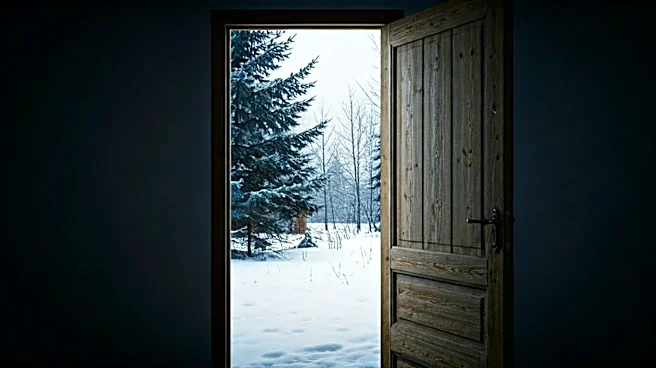










The Myth of the Dramatic Exit
Let’s get the big question out of the way first: director Debra Granik never walked off the set of *Winter’s Bone*. In fact, a deep dive into the film’s history reveals no evidence of on-set blow-ups, creative standoffs, or a mid-production departure.
The story is pure fiction. Interviews with Granik, her producing and writing partner Anne Rosellini, and cast members paint a picture of a grueling and demanding shoot, but one defined by a united and unwavering commitment to the project. The production was less a hotbed of drama and more a masterclass in grit. The real story isn't about why she left, but why she fought so hard to stay and see her uncompromising vision through to the end.
The Real Battle: A Fight for Financing
The true conflict surrounding *Winter’s Bone* happened long before the cameras started rolling. The primary struggle was getting anyone to pay for it. In interviews, Granik has been candid about the difficulty of securing the film's shoestring $2 million budget. [8, 16] She described the project as "unappealing to any financing entity, even those open to socially relevant material." [4] The reasons were blunt: investors saw a story about rural poverty in America as a "downer." [4] They worried audiences wouldn’t connect with a narrative so far removed from the affluent worlds typically depicted on screen. Granik called the Herculean effort to get the film funded the production’s biggest challenge, a pre-production anxiety that forged a resilient and resourceful team. [4] This wasn't a cushy studio gig; it was an underdog project from the very start.
An Immersive and Demanding Vision
Instead of walking away, Granik dug in deeper than most directors would dare. To achieve the stark authenticity that defines the film, she and Rosellini spent years researching and embedding themselves in the Missouri Ozarks, the region where Daniel Woodrell's source novel is set. [12] This wasn't a case of sending a location scout; the filmmakers went themselves to understand the culture and the landscape. The production itself was an immersive experience, shooting over 25 days in the Missouri winter, with cast and crew living among the local community. [9] Many locals were hired as cast members and advisors, ensuring the film’s world felt lived-in and real. This hands-on, deeply committed approach is the polar opposite of a director looking for an escape route. It was a philosophy of total immersion.
Finding a Heroine With No Ambivalence
Granik’s dedication extended to her casting. She knew the role of 17-year-old Ree Dolly required a special kind of performer. She needed someone tough, grounded, and utterly invested in a story that many in Hollywood found too grim. In one interview, Granik recalled meeting with an established "It Girl" actress whose ambivalence about the role was so palpable it was intimidating. [4] For a low-budget film shooting in harsh conditions, any hesitation from the lead would have been disastrous. Then came a then-unknown Jennifer Lawrence. Born and raised in Kentucky, Lawrence had a familiarity with the cadence and culture of the region. [15] She didn’t just play Ree; she inhabited her with a fierce conviction that anchored the entire film. Granik found her hero in a girl’s body, a performer who didn’t just accept the film’s challenges but embraced them. [4]
The Legacy of Sticking It Out
The ultimate proof that Granik’s story is one of perseverance is the film’s legacy. After its debut, *Winter’s Bone* became a critical sensation. It won the Grand Jury Prize at the 2010 Sundance Film Festival and went on to earn four Academy Award nominations, including Best Picture, Best Adapted Screenplay, and Best Actress for Jennifer Lawrence. [16] That Oscar nod catapulted Lawrence from an unknown actress to one of the most in-demand stars in the world. The film grossed over $16 million worldwide on its $2 million budget, proving the initial financiers wrong. [16] None of this would have happened if its director had given up. The success of *Winter’s Bone* is a direct result of Granik and her team’s refusal to compromise their vision or walk away when things got tough.