





The Tactical Chess Match on the Sideline
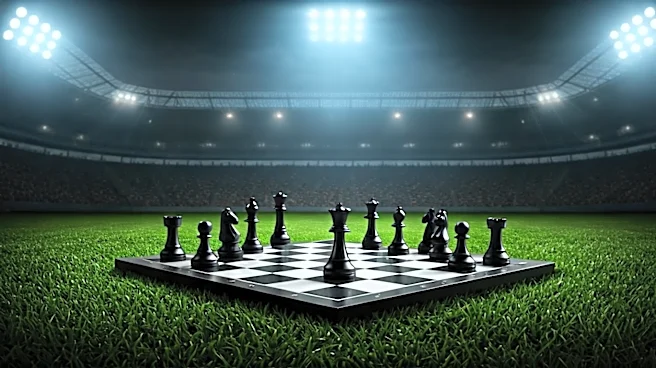
Forget the ball for a second and watch the coaches. Those men in suits aren't just standing there looking anxious. They're constantly engaged in a high-stakes chess match. Did one team suddenly switch from a 4-4-2 formation to a 3-5-2 after halftime? That’s not random; it’s a direct response to exploit a perceived weakness. A key substitution isn’t just about getting a tired player off the field. It’s often a calculated move to change the game's tempo, introduce a different skill set (a speedy winger, a powerful defender), or counter a move made by the opposition. This silent, strategic war between the two benches often decides the outcome long before the final whistle.
The Subtle 'Dark Arts' of Gamesmanship
Soccer's physicality isn't just about hard tackles. There's a whole world
of psychological warfare known as the "dark arts." Watch how a veteran defender subtly steps on a striker's foot just after the play is over. See how a player who’s been fouled exaggerates the fall, not just to draw a penalty but to get an opponent a yellow card, making them play more cautiously for the rest of the match. Time-wasting is another classic. A player taking an eternity on a throw-in when their team is ahead is infuriating, but it's also a strategic way to kill momentum and frustrate the opposition into making a mistake. It's a low-key, often cynical performance happening in plain sight.
The Referee's Tightrope Walk
The person with the most thankless job on the field is the referee. They aren't just enforcing rules; they're managing the personalities of 22 elite, high-strung athletes who are experts at bending those rules. Every decision is scrutinized by millions. Watch how players surround the ref after a call, trying to influence the next one. Notice the ref's body language—is he letting the game flow, or is he calling it tightly to assert control? The introduction of the Video Assistant Referee (VAR) adds another layer of drama, creating tense, game-halting moments where a goal can be erased or a penalty awarded based on a review, turning the ref from an arbiter into the star of a brief, high-pressure courtroom drama.
The Mini-Battle of Set Pieces
For Americans, the best analogy for a corner kick or a crucial free kick is a special teams play in football. The game stops, and a highly rehearsed, specialized sequence begins. Teams spend hours practicing these "set pieces." Watch the movement in the penalty box before a corner kick. It’s not just a chaotic scrum. Players use picks and screens (often illegally) to free up their best headers. The kicker isn't just booting it into the middle; they are aiming for a specific player or a pre-planned spot. These moments are huge opportunities for less-dominant teams to score, representing a brief, structured battle within the larger, more fluid war of the game.
The War for Momentum
Goals are the ultimate momentum-shifters, but the tide of a game can turn on much smaller events. A crunching, perfectly timed tackle that stops a promising attack can energize a defense and an entire stadium. A spectacular save by a goalkeeper can deflate the attacking team, making them feel like they'll never score. Conversely, a clumsy giveaway in the midfield can suck the confidence out of a team. This invisible currency—momentum—is what players are constantly fighting for. You can see it in their body language: shoulders slump after a missed chance, while chests puff out after a strong defensive stand. Tracking these emotional swings adds a powerful narrative layer to the 90 minutes.