
The Ten-Second Story Rule
The fundamental challenge of a Halloween Horror Nights house is throughput. The goal is to move thousands of guests through the experience each night, which means you’re on a relentless forward march. You don't have time to read a plaque, study a prop,
or absorb subtle environmental details. Creative directors have long understood that they have mere seconds to communicate a scene's purpose. As a result, the design philosophy isn't about creating a perfect, detailed film set; it’s about creating a series of powerful, instantly readable impressions. Each room or scene must tell its micro-story in the time it takes for you to walk through it. This constraint forces designers to think less like movie set decorators and more like billboard artists, prioritizing immediate impact over granular detail.
Designing for the Lizard Brain
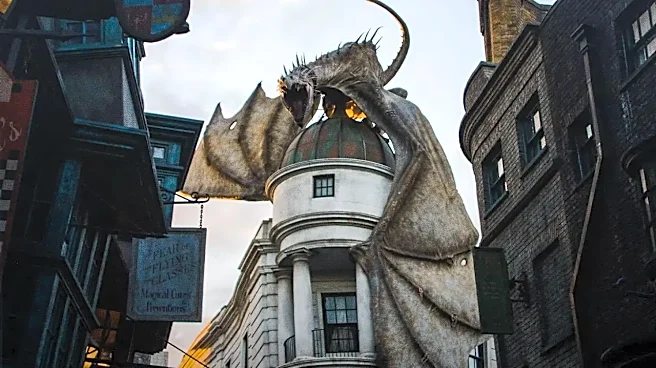
When you’re being hunted by a chainsaw-wielding maniac or a creature from another dimension, your higher cognitive functions take a backseat. The psychological state induced by a haunted house is one of high-arousal and hypervigilance. Your brain isn't analyzing narrative structure; it’s scanning for threats. This is where bold visual anchors come in. An anchor can be a massive puppet, a shocking tableau, or an architecturally imposing set piece. These elements are so large, so dominant, or so thematically potent that they cut through the cognitive noise. Your 'lizard brain' processes them instantly: that's big, that's a threat, that's the monster. This approach is rooted in the psychology of fear, using our own primal responses to ensure the story lands even when we're too scared to think straight.
Anchors in Action: Memorable Moments
This design theory is visible in some of the event's most iconic houses. When translating a property like "The Exorcist," which largely takes place in one bedroom, designers had to invent connective tissue. They used the demonic face of Pazuzu as a recurring, subliminal anchor to transition between scenes, giving guests a consistent visual thread. For a maze based on "Stranger Things," the looming, monstrous Demogorgon serves as a terrifying visual centerpiece. Similarly, in original concept houses, a massive central figure like a giant sea creature in "Dead Man's Pier: Winter's Wake" or the vibrant, oversized plants in "Wicked Growth: Realm of the Pumpkin" provide an unforgettable focal point that defines the entire experience. These aren't just props; they are the narrative and emotional signposts of the maze.
More Than Just a Landmark
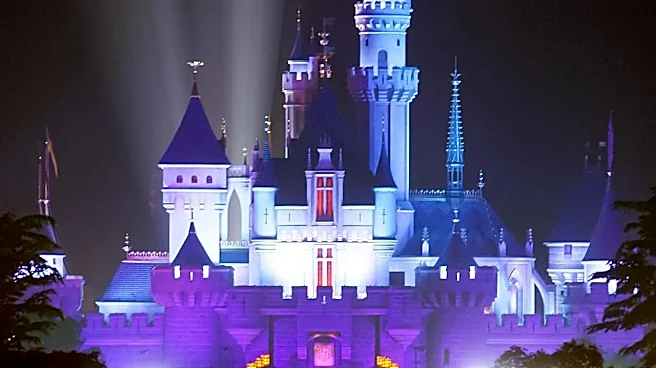
Theme park fans might compare this to the Disney concept of a 'weenie'—a large, attractive landmark like a castle that draws guests through the park. The principle is similar, but the application at Horror Nights is more aggressive. A Disney weenie is a promise of an attraction you can walk toward. An HHN anchor is a statement of theme and threat delivered in a flash. It’s not just orienting you in a space; it's defining your emotional state within it. While the façade of a house like "The Haunting of Hill House" establishes a mood, the true anchors inside—like the appearance of the Bent-Neck Lady—are designed to deliver a specific narrative beat and a jolt of fear simultaneously. They are storytelling devices built for speed and impact, ensuring every guest, no matter how fast they're moving, gets the point.