






The Warning Shot: The Yellow Card
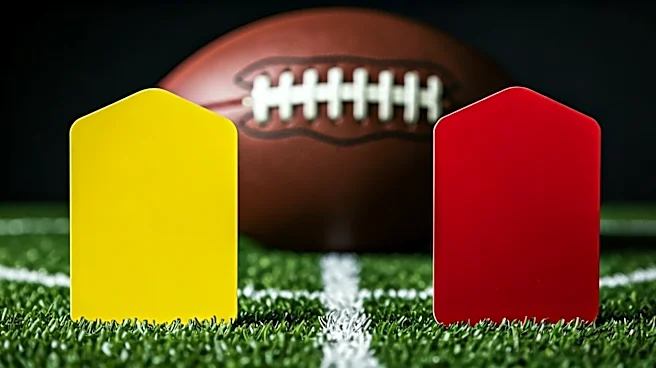
Think of a yellow card in soccer as a formal, public warning. It’s the referee telling a player, “I see what you did, don’t do it again.” Officially known as a “caution,” it’s shown for a range of offenses that break the rules of sportsmanship but aren’t
egregious enough for immediate expulsion. These include reckless tackles where a player shows disregard for an opponent's safety, deliberately handling the ball to stop an attack, arguing excessively with the referee (dissent), or time-wasting. The immediate consequence is a brief stoppage of play and a free kick for the opposing team. But the real weight of the yellow card is what it represents for the rest of the match. A player with a yellow card is on a knife’s edge. They must play more cautiously, pulling out of challenges they might otherwise make. It’s a psychological burden. And crucially, if that same player commits another offense worthy of a caution, they receive a second yellow card, which automatically results in a red card.
Game Over: The Red Card
If a yellow card is a warning, a red card is a sentencing. It signifies immediate expulsion from the game. A player shown a red card must leave the field immediately and cannot be replaced. Their team must play the remainder of the match—whether that’s 60 minutes or 60 seconds—with one fewer player. It is the single most game-altering event in soccer. A player can receive a red card in two ways. The first is by accumulating two yellow cards in the same match. The second is a “straight red” for a particularly heinous offense. These include “serious foul play” (a tackle that endangers an opponent), violent conduct (like punching or kicking), spitting at someone, or denying an obvious goal-scoring opportunity with a deliberate handball or foul. A straight red often carries a multi-game suspension, meaning the punishment extends beyond the current match. Playing with 10 players instead of 11 is a massive disadvantage, forcing teams to completely alter their strategy and often shift to a purely defensive posture.
The High-Stakes Showdown: The Penalty Kick
A penalty kick is not a card, but rather a specific punishment for a severe foul committed by the defending team inside its own penalty area (the large box in front of the goal). When a defender commits a foul like tripping or pushing an attacker inside this box, the referee awards a penalty kick. This is soccer’s version of a high-noon duel. The ball is placed on the penalty spot, just 12 yards from the goal line. It’s a one-on-one battle between the attacking team’s designated kicker and the defending team’s goalkeeper. All other players must remain outside the penalty area until the ball is kicked. Statistically, professional players convert penalty kicks around 75-80% of the time, making it one of the most high-leverage moments in sports. The pressure on both the kicker to score and the keeper to make a heroic save is immense, often deciding the outcome of championships.
How This Compares to the NFL
This is where the two “footballs” diverge dramatically. American football is a game of territory, so its penalties are primarily measured in yards. A 5-yard penalty for a false start or a 15-yarder for a facemask pushes a team back, making their drive harder. It’s a setback, but the team remains whole. A yellow card is loosely analogous to a 15-yard unsportsmanlike conduct penalty—it’s a stern punishment, but no one gets kicked out. The concept of a red card has no direct, common equivalent in the NFL. While players can be ejected for throwing a punch or making deliberate contact with an official, it’s an exceptionally rare event that stems from behavior far outside the normal flow of play. There is no rule where a certain number of standard fouls (like holding or pass interference) results in an automatic ejection. The fundamental integrity of the 11-on-11 matchup is almost always preserved. Likewise, the penalty kick has no clean counterpart. The closest comparison in terms of pressure might be a 4th-and-goal from the one-yard line or a game-winning field goal attempt as time expires. But the mechanism is different. NFL penalties reset the down and distance; soccer's penalty kick creates a unique, isolated scoring play that is far more likely to result in points than any single play in football.