
The Planet's Biggest Stage
First, consider the sheer scale. Other championships are big; the World Cup is planetary. The Super Bowl, America’s great sporting spectacle, might draw 120 million viewers in the U.S. and a sizable number
more globally. The 2022 FIFA World Cup Final, by contrast, was watched by an estimated 1.5 billion people. It’s not a niche interest or a regional obsession; it is the one event that truly commands the entire world’s attention. When a player lifts that trophy, they are doing so on a stage of unmatched size. The image is instantly broadcast to every corner of the globe, understood in every language as the universal symbol of being the best. No other sporting moment—not the Olympics, not a Game 7, not a Grand Slam final—offers that singular, collective focus.
The Grueling, Unforgiving Gauntlet
The journey to that moment is uniquely brutal. The World Cup isn't a long season or a best-of-seven series where you get a second chance. After a grueling group stage, it’s a month-long, single-elimination tournament. One bad game, one unlucky bounce, one missed penalty, and you’re on a plane home. The pressure is immense and unforgiving. Teams must navigate seven high-stakes matches in roughly 30 days, managing fatigue, injuries, and the psychological weight of it all. This format creates a narrative of pure survival. The team left standing isn't just the best; it's the most resilient, the most clutch, the one that stared into the abyss of elimination and refused to blink. The trophy lift isn’t just a celebration of victory; it’s a visceral exhale after a month of suffocating tension.
The Weight of a Nation
Unlike in club sports, where players represent cities or corporate franchises, World Cup athletes wear the colors of their country. They aren’t just playing for a paycheck or a title; they are carrying the hopes, dreams, and identity of millions of their countrymen. A victory can heal national wounds, spark economic confidence, and define a generation. When Argentina won in 2022, Buenos Aires erupted in a way that had nothing to do with a club rivalry. It was a moment of national catharsis, embodied by Lionel Messi finally capturing the one prize that had eluded him. That connection transforms the trophy lift from a simple athletic achievement into a powerful act of national expression. The captain isn't just lifting a cup for his teammates; he's lifting it for every person back home.
An Icon of Solid Gold
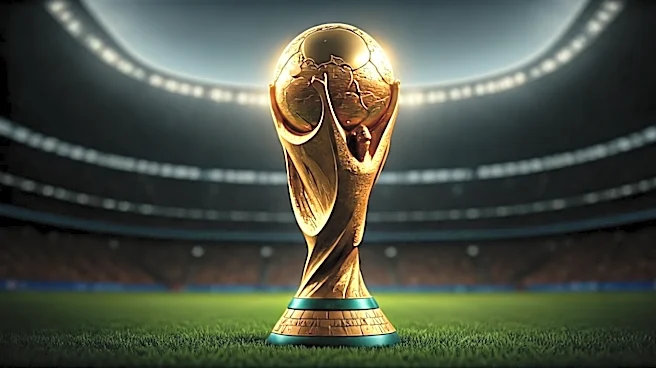
Finally, there is the object itself. The FIFA World Cup Trophy is not a generic silver cup passed around from year to year. It is an icon. Designed in 1974 after the original Jules Rimet Trophy was permanently given to (and later stolen from) Brazil, the current trophy is a work of art. Made of 18-karat gold, it depicts two human figures holding up the Earth. It’s a design that is both elegant and powerful, instantly recognizable to anyone who has ever kicked a ball. It has a mystique that other trophies lack. It’s not just a prize; it’s a holy grail. Its visual power amplifies the moment. The image of a hero hoisting that specific golden sculpture is seared into the collective memory of the sport, from Diego Maradona in 1986 to Carli Lloyd in 2015 to Messi in 2022.