





In 2018, a 40-year-old horror movie villain roared back to life and shattered box office records. Universal's 'Halloween' didn't just succeed; it dominated. How did they turn a tired franchise into a must-see cultural event? It wasn't luck.
The Challenge: Reviving a Messy Legend
By 2018, the
'Halloween' franchise was a tangled mess of sequels, reboots, and retcons. After ten films of varying quality, Michael Myers had lost his terrifying mystique. The challenge for Universal Pictures and their partner, Blumhouse Productions, was monumental: how to re-engage long-time fans who felt burned out, while also capturing a new generation that had no connection to the 1978 original. The solution required more than just a new movie; it demanded a marketing masterstroke that could simplify the story and restore its power.
The Masterstroke: A True Sequel
The campaign's core genius was its simplest idea: ignore everything but the original. Director David Gordon Green's film was positioned as a direct sequel to John Carpenter's 1978 classic, erasing four decades of convoluted mythology. This decision was a marketing gift. It told new viewers they only needed to know one film, not ten. For old fans, it was a promise to return to the spirit of the original. The message was clean, powerful, and easy to communicate: this is the real story of what happened 40 years later. John Carpenter's involvement as an executive producer and composer lent crucial credibility, signaling his approval of this new direction.
The Star Power: A Hardened Laurie Strode
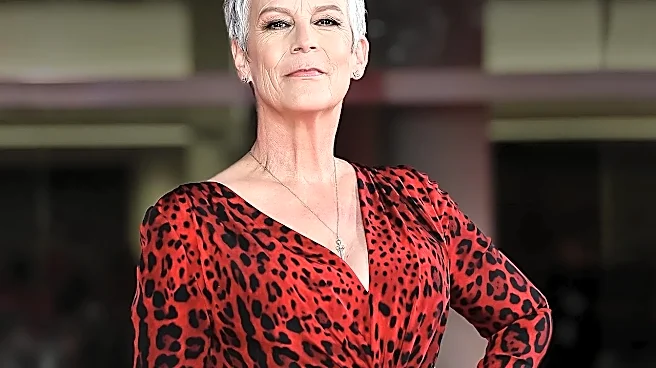
The campaign's emotional anchor was the return of Jamie Lee Curtis as Laurie Strode. But this wasn't the terrified teenager from 1978. The marketing smartly centered on a new version of Laurie: a hardened, prepared survivor suffering from decades of trauma. Curtis became the face of the promotional tour, eloquently speaking about her character's journey and framing the film in the context of the then-burgeoning MeToo movement. She presented it not just as a slasher flick, but as a story of a woman taking back her narrative. This elevated the material and gave it a timely cultural resonance that expanded its appeal beyond horror fans. Her a-list status brought a level of press coverage and legitimacy the franchise hadn't seen in years.
The Blumhouse Blueprint: Lean and Mean
Partnering with Blumhouse Productions was another key strategic decision. Known for its 'low-budget, high-concept' model, Blumhouse produced 'Halloween' for a mere $10 million. This lean budget minimized financial risk for Universal and maximized potential profit. More importantly, Blumhouse had a brand identity synonymous with smart, director-driven horror hits like 'Get Out' and 'The Purge'. Their involvement was a seal of quality for modern horror audiences, promising a film that was scary, smart, and respected its audience. This wasn't just another cash-grab sequel; it was an event from the hottest studio in horror.
The Results: A Box Office Massacre
The campaign worked spectacularly. Initially projected to open in the $50-60 million range, 'Halloween' debuted to a stunning $76.2 million in its opening weekend in the United States and Canada. It broke multiple records, becoming the biggest opening for a film with a female lead over 55 and the largest debut in the history of the 'Halloween' franchise. The film's entire weekend gross surpassed the total domestic gross of most of its predecessors. With a total worldwide gross of over $255 million on its tiny budget, the film was immensely profitable, proving that Universal's carefully constructed campaign had successfully turned a 40-year-old slasher into one of the biggest entertainment stories of the year.