




The Birth of 'Balmainia'
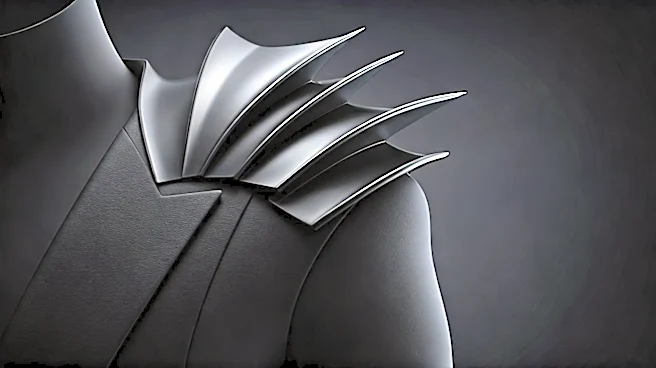
To understand the shoulder, you have to understand the moment. In the late 2000s, the fashion world was still reeling from the global financial crisis. Minimalism and quiet luxury were the prescribed antidotes. Then came Christophe Decarnin at Balmain. Appointed in 2005, his vision for the French house was anything but quiet. By 2009, he had unleashed a collection of hyper-expensive, artfully distressed, and aggressively glamorous pieces. The signatures? Skin-tight leather pants, military-inspired jackets dripping with embellishment, and most importantly, the exaggerated, jutting shoulder. It was a silhouette that screamed defiance, wealth, and unapologetic power. This wasn't just fashion; it was an attitude. The press dubbed it 'Balmainia,'
a feverish obsession with a look that was equal parts rock-and-roll and high-fashion combat gear.
A Look for the Limelight
While fashion editors debated the aesthetic, musicians embraced it. The American Music Awards, always a bit more rock-and-roll and less formal than the Oscars, became the perfect stage for this new power dressing. The Balmain shoulder was made for performers whose currency is confidence. It visually broadened the frame, creating an imposing, almost heroic figure. Think of it as the 21st-century version of an 80s power suit, stripped of its corporate connotations and injected with pure celebrity swagger. Early adopters like Rihanna and Beyoncé, artists who built empires on their commanding stage presence, were naturally drawn to the look. It wasn't just a dress; it was an extension of their on-stage persona—bold, untouchable, and in control. The sharp shoulder didn’t just look good in photos; it communicated a message before the star even spoke a word or sang a note.
The Rousteing Reinvention
When Olivier Rousteing took the helm at Balmain in 2011, he didn't abandon the sharp shoulder; he supercharged it. The young designer understood the power of celebrity and social media, creating the #BalmainArmy—a loyal squad of the world's most famous faces. The sharp shoulder remained, but Rousteing refined it, weaving it into intricate gowns, beaded jumpsuits, and structured blazers. His vision was less gritty rock-and-roll and more high-octane glamour. A prime example is Jennifer Lopez at the 2015 AMAs. Her intricate, cut-out gown featured structured shoulders that framed her physique, blending sensuality with sheer force. Rousteing’s Balmain wasn’t just for a single red carpet moment; it became a uniform for a generation of artists, from Taylor Swift to Kim Kardashian, who wanted to project an image of impenetrable strength and meticulously crafted beauty.
More Than Just a Jacket
Calling the Balmain shoulder 'armor' isn't just a metaphor; it's a functional description. In the flashbulb-popping chaos of a red carpet, where every angle is scrutinized, the structured silhouette provides a sense of protection. It creates a physical barrier, a piece of wearable architecture that commands space. For female artists in a male-dominated industry, it offered a way to project strength without sacrificing glamour. It was a rejection of the soft, flowing, traditionally feminine gowns often seen at award shows. This look was assertive, not passive. It said, 'I am here, I am powerful, and I am not to be messed with.' The sharp shoulder became a visual shorthand for a new kind of female pop star: the CEO, the mogul, the artist in complete control of her image and her empire.