



The Two-Second 'Stretch and Snap' Test
The single best way to predict a neckline’s future is to test its recovery before you even buy the garment. Forget yanking on it wildly; this is a more controlled method. Gently take a small section of the neckline's ribbing and stretch it widthwise.
Hold it for a few seconds, then release it. Now, watch closely. Does it immediately snap back to its original shape? If it does, you’re looking at a neckline with good 'recovery'. If it stays slightly stretched out, looking a little lax and defeated, that’s a major red flag. That small amount of 'growth' you see in the store will only worsen with wear and washing. This simple 'stretch and snap' is your most reliable predictor of long-term shape retention.
What Good Recovery Really Means
Stretch and recovery are two different things. Almost all knits stretch—that’s what makes them comfortable. But recovery is the fabric’s ability to return to its original form after being stretched. This quality is primarily driven by the fiber content and the knit structure. Fabrics containing a small percentage of elastane, spandex, or Lycra (typically 3-5%) have a built-in 'memory' that helps them bounce back. High-quality natural fibers like wool also have a natural crimp and elasticity that helps them recover well. In contrast, some 100% cotton knits, especially looser or lower-quality ones, may have decent stretch but poor recovery, leading to the dreaded 'bacon neck' over time. When you perform the snap test, you're not just checking for stretchiness; you're testing for this crucial elastic spring-back.
Beyond the Test: Inspect the Neckline's Construction
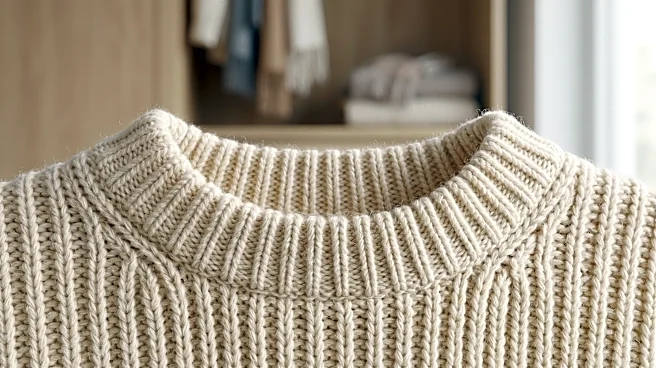
While the snap test is key, also take a look at the neckline’s construction. A well-made garment often has a dedicated 'rib knit' collar, which is a specific type of knit designed for elasticity and shape retention. Look for a 1x1 rib (one raised column alternating with one recessed column), which is the industry standard for durable t-shirt and sweater necklines. Some high-quality tops also have a fabric 'stay tape' sewn along the inside of the back neck and shoulder seams. This non-stretchy tape provides reinforcement, preventing the weight of the garment from pulling the neckline down and out of shape over time.
Caring for Your Knits to Prevent Stretching
Once you've chosen a sweater with good recovery, proper care is essential to preserving its shape. First, avoid hanging your sweaters, especially heavy ones. The constant pull of gravity is a primary cause of stretched-out shoulders and necklines. Fold them and store them flat in a drawer or on a shelf. When it's time to wash, follow the care label. For most knits, washing in cool water and laying them flat to dry on a towel is the safest method. The heat from a dryer can damage elastic fibers and permanently set a stretched-out shape. Never wring out a wet sweater; instead, gently roll it in a towel to press out excess water before laying it flat to dry.
An Emergency Fix for Minor Stretching
If you have a beloved sweater with a neckline that's already started to sag, don't despair. You may be able to bring it back. A simple and effective method involves steam. Use a garment steamer or the steam function on an iron (held a few inches away from the fabric) to heat and dampen the neckline. While it’s warm and damp, use your hands to gently scrunch and reshape the collar back into a tighter circle. Let it cool and dry completely while lying flat. For a more permanent reinforcement on a hand-knit or loosely knit item, some people crochet a chain of slip stitches along the inside base of the collar with matching yarn, which adds a line of non-stretchy structure.